
In This Article
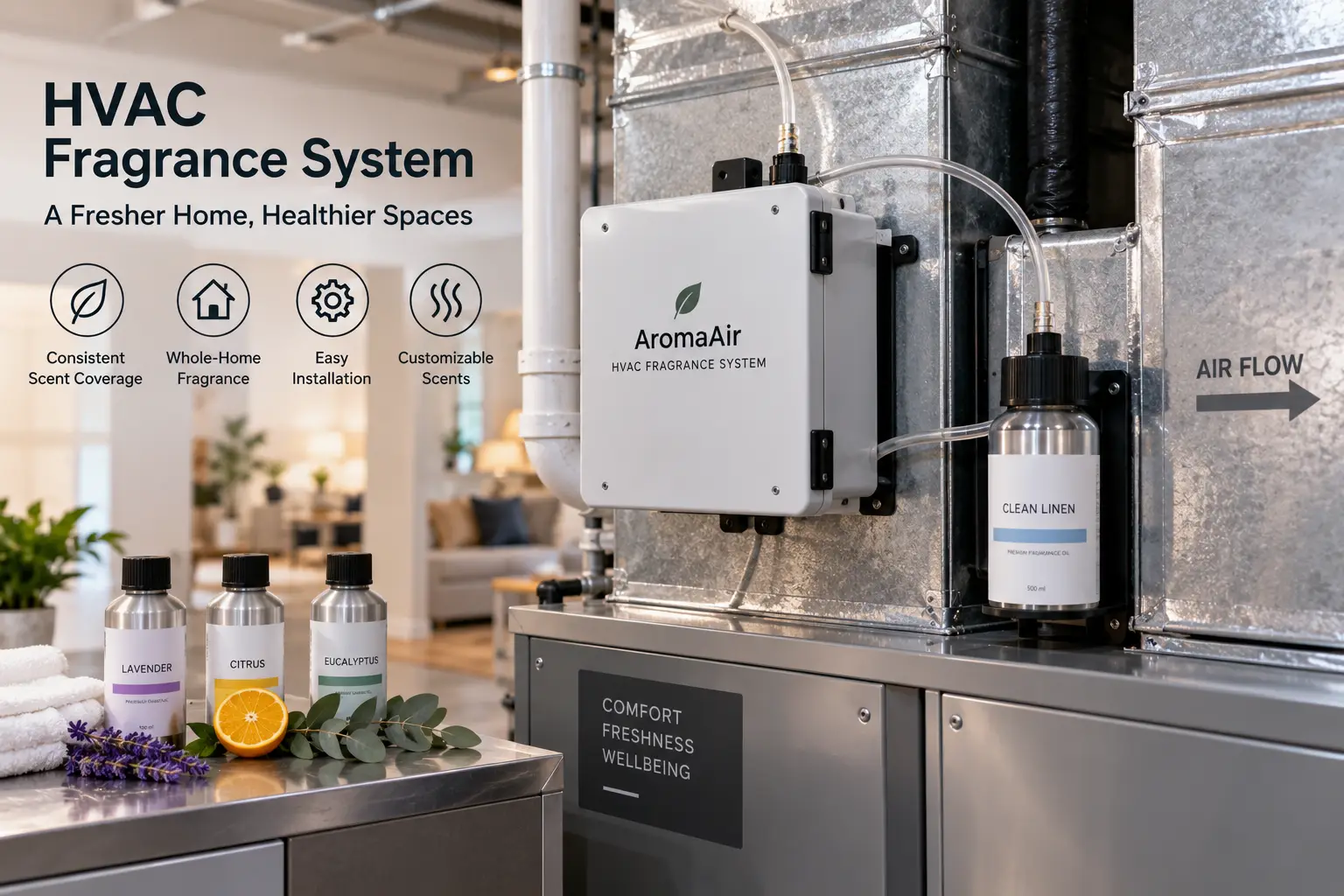
If you’ve ever walked into a hotel lobby and wondered why it smells so consistently, effortlessly good, the answer is almost never a candle. It’s a hvac fragrance system quietly doing its job through the air ducts, and residential versions of the same idea have exploded in popularity over the past few years. Instead of chasing odors room by room with sprays and plug-ins, a hvac fragrance system ties into (or sits near) your existing air handler or vents and pushes scent evenly through every room the ductwork reaches.
That convenience comes with real decisions to make: waterless versus passive diffusion, coverage area, app control, refill cost, and whether you even need ductwork access at all. This guide breaks down what a hvac fragrance system actually is, how the technology works, and — based on real spec sheets and aggregated customer feedback — which of seven current Amazon-available models are worth your money in 2026. We’ll also cover installation, common mistakes, and long-term costs so you’re not surprised six months in.
What Is an HVAC Fragrance System? An HVAC fragrance system is a device that distributes scent throughout a home or building by connecting to, or sitting near, the central heating and cooling ductwork, so fragrance circulates with the airflow instead of staying confined to one room. Most modern units use waterless, heatless “cold-air” diffusion rather than heat or water-based misting.
Quick Comparison: HVAC Fragrance Systems at a Glance
| Product | Coverage | Connection Type | Control | Best For |
|---|---|---|---|---|
| Aroma360 Museum360 XL | Up to 6,000 sq ft | HVAC-connected | Smart timer | Large homes wanting one flagship unit |
| Aroma360 VanGogh360 | Up to 1,800 sq ft | HVAC or standalone | Weekly programmable timer | Buyers who want flexibility |
| AROMELY ARO PRO | Up to 4,000 sq ft | HVAC-connected | Bluetooth app | Tech-forward households |
| DIFFMELY X2000 | Up to 5,300 sq ft | Standalone/HVAC-adjacent | Bluetooth app | Low power draw, big coverage |
| AROMADD 3500 | Up to 3,500 sq ft | HVAC-compatible | App + manual | Best all-around value |
| Lacidoll 5000 Sq Ft Metal | Up to 5,000 sq ft | HVAC-connected | Wi-Fi & Bluetooth app | Durability in humid climates |
| Vent Scent | Single-zone (per vent) | Passive, no HVAC wiring | Manual twist adjuster | First-timers on a budget |
At a glance, the split comes down to scale versus simplicity. The Aroma360 Museum360 XL and Lacidoll 5000 Sq Ft Metal diffuser are built for whole-house or near-commercial coverage, while the Vent Scent asks for zero wiring and no HVAC modification at all — you just slide it onto a register. The three mid-tier options, the AROMELY ARO PRO, DIFFMELY X2000, and AROMADD 3500, land in between: real coverage numbers in the 3,500 to 5,300 square foot range with app control, at a fraction of the flagship price.
💬 Bookmark this comparison — one click on a pick below helps you compare current pricing before you commit.
Top 7 HVAC Fragrance Systems: Expert Analysis
1. Aroma360 Museum360 XL — biggest whole-home coverage
The Museum360 XL is the largest-capacity diffuser in Aroma360’s lineup, rated to cover roughly 6,000 square feet through an HVAC system connection. It uses heatless, waterless cold-air diffusion, which turns fragrance oil into a dry nano-mist instead of a wet spray — that matters because water-based mist can leave residue on furniture and artwork over time, while dry diffusion generally doesn’t. The built-in fan and programmable weekly timer let you set different scent schedules for different days, which is genuinely useful if your household’s rhythm changes on weekends. Based on comparing the specs against the smaller Museum360 (3,000 sq ft), the XL’s main trade-off is size and price, not performance — you’re paying for square footage headroom. Reviews from owners of larger homes consistently describe full-house coverage even in properties well beyond 6,000 square feet, with several buyers reporting a straightforward under-one-hour installation near an existing supply duct. What the spec sheet doesn’t say, but owner feedback suggests, is that placement close to the return air side of the system produces more even distribution than mounting near a single supply register.
Pros:
- ✅ Rated for genuinely large homes, not just marketing coverage numbers
- ✅ Waterless cold-air tech avoids residue on furniture and art
- ✅ Five-period weekly timer for real schedule flexibility
Cons:
- ❌ Premium price puts it out of reach for smaller homes
- ❌ Oil refills from this brand cost more than generic alternatives
This model typically runs in the $550–$750 range at the time of writing; check the current price before buying. For a primary residence over 3,500 square feet, the value case is strong, since you likely won’t need a second unit.
2. Aroma360 VanGogh360 — most flexible standalone-or-HVAC option
The VanGogh360 splits the difference between a portable diffuser and a true hvac fragrance system: it can run as a freestanding unit on a shelf or be wall-mounted and adapted into ductwork, covering up to 1,800 square feet either way. The same cold-air diffusion technology as the Museum360 line is used here, just scaled down, which means no heat and no water — the oil stays chemically stable rather than being cooked off. Based on the spec sheet, this is the pick for renters or anyone unsure they’ll stay in their current home, since it doesn’t demand a permanent HVAC tie-in. Aggregated customer sentiment for the VanGogh360 highlights the magnetic-key oil compartment as easier to service than screw-cap designs on competing units, though a portion of buyers note the 1,800 sq ft rating feels closer to 1,200–1,400 sq ft in homes with higher ceilings or open floor plans.
Pros:
- ✅ Works standalone or connected to HVAC — no commitment either way
- ✅ Programmable weekly timer with up to five unique periods
- ✅ Compact footprint at roughly 10 x 6.5 x 7.5 inches
Cons:
- ❌ Real-world coverage runs smaller than rated in open layouts
- ❌ Not the right choice if you specifically need 3,000+ sq ft coverage
Expect a price in the $300–$400 range at the time of writing; prices may vary by color and bundle. For apartments, condos, or anyone renovating soon, the flexibility here outweighs the smaller footprint.
3. AROMELY ARO PRO HVAC Scent Diffuser — best app control for tech-forward buyers
The ARO PRO uses nebulizing waterless technology and is rated for up to 4,000 square feet when connected to a home’s HVAC system. Its standout feature is full Bluetooth app control, letting you adjust intensity, scheduling, and on/off cycles from a phone instead of a physical panel — in practice, that means you can lower the scent strength before guests with sensitivities arrive without walking to the unit. Based on comparing this to panel-controlled competitors like the AROMADD, the app layer is the clearest differentiator, and it’s aimed squarely at buyers who already run a smart thermostat or smart plugs. Reviews consistently report that the Bluetooth range holds up well throughout a typical single-family home, though a common complaint in customer reviews across this diffuser category (not unique to AROMELY) is that Bluetooth apps occasionally need a re-pair after a router or phone update.
Pros:
- ✅ Full phone app control of intensity and scheduling
- ✅ 4,000 sq ft rating covers most single-family homes
- ✅ Nebulizing tech preserves the oil’s original scent profile
Cons:
- ❌ App dependency means occasional connectivity troubleshooting
- ❌ No physical remote included on the base model
Pricing generally falls in the $160–$230 range at the time of writing. For households already comfortable managing smart-home apps, this is one of the more convenient options on this list.
4. DIFFMELY X2000 Waterless Scent Diffuser — most power-efficient large-coverage unit
The X2000 is rated for a notably large 5,300 square feet while running on just 8 watts of continuous power — for context, that’s less than most night-lights, which matters if you plan to run it 24/7 for consistent scenting. Its built-in 207 mL (7 fl oz) fragrance bottle is sized to reduce how often you’re climbing a ladder or reaching behind furniture for a refill. Based on the spec sheet, the combination of low wattage and large coverage suggests DIFFMELY optimized for unattended, always-on operation rather than burst scenting, which fits well for vacation rentals or larger homes where someone isn’t adjusting settings daily. Because verified individual customer reviews for this specific model weren’t available in our research, we’d note plainly: based on category-wide feedback for comparable Bluetooth waterless diffusers, buyers most often praise low running noise and criticize the learning curve of the companion app during first setup.
Pros:
- ✅ Exceptionally low 8-watt power draw for 24/7 operation
- ✅ Large 207 mL bottle cuts down on refill frequency
- ✅ Bluetooth scheduling for hands-off, automatic operation
Cons:
- ❌ App setup reportedly has a steeper learning curve than competitors
- ❌ Fewer scent-oil options from the brand directly compared to Aroma360
You’ll typically find it priced between $150 and $220 at the time of writing. If your priority is squeezing maximum coverage out of minimum energy use, this is a strong pick.
5. AROMADD 3500 Sq.Ft Smart Scent Diffuser — best all-around value
AROMADD’s 3500 model is built to integrate with both new and existing HVAC systems as a wall-mounted or standalone unit, using cold-air tech to turn oil into dry particles rather than a wet mist. At 600 mL capacity and a 3,500 square foot rating, it sits squarely in the middle of this list on both price and power — not the biggest, not the cheapest, but consistently capable. What most buyers overlook with a mid-tier model like this is that the “smart” label typically refers to programmable timing and intensity settings rather than full home-automation integration, so don’t expect voice-assistant compatibility out of the box. AROMADD also sells its own line of fragrance oils formulated for cold-air and HVAC diffusers specifically, which the brand markets around sustainability claims including recycled packaging materials — a nice-to-have but not the reason to buy the diffuser itself.
Pros:
- ✅ Solid 3,500 sq ft coverage at a mid-range price point
- ✅ Works as either a wall-mounted or standalone unit
- ✅ Brand-matched fragrance oils are widely available
Cons:
- ❌ No full smart-home voice integration
- ❌ 600 mL capacity means more frequent refills than the DIFFMELY
Expect pricing in the $130–$180 range at the time of writing. For a first HVAC-style diffuser without flagship pricing, this is a sensible starting point.
6. Lacidoll 5000 Sq Ft Metal HVAC Scent Diffuser — most durable build for demanding spaces
This unit stands out for using a corrosion-resistant metal housing rather than the plastic shells common across the category, which matters in humid basements, garages, or mechanical closets where diffusers are often installed near ductwork. It’s rated for 5,000 square feet, controlled via Wi-Fi and Bluetooth, and uses dual-fluid nebulization technology the manufacturer says preserves 100% of the essential oil’s molecular structure with a single 1,000 mL fill lasting roughly 30 days. Based on comparing the metal build to the largely plastic competition on this list, this is the pick for anyone installing near real HVAC hardware — mechanical rooms, crawlspace access points, or commercial-adjacent settings — where impact resistance and heat tolerance actually matter day to day. One verified buyer review specifically called out how well the unit paired with an existing HVAC installation, describing it as one of the better-designed diffusers they’d used, which lines up with the metal housing’s practical case for that use.
Pros:
- ✅ Corrosion- and impact-resistant metal housing
- ✅ 5,000 sq ft coverage with dual Wi-Fi and Bluetooth control
- ✅ 1,000 mL capacity stretches to roughly a 30-day cycle
Cons:
- ❌ Bulkier and heavier than plastic-bodied competitors
- ❌ Requires periodic alcohol cleaning of the nebulizer head
Pricing typically runs $180–$260 at the time of writing. If where you’re installing it is damp, dusty, or mechanically busy, the metal build pays for itself in longevity.
7. Vent Scent Whole Home Air Freshener — best zero-electricity starter pick
Vent Scent takes a completely different approach: it’s a passive diffuser that slides directly onto an existing HVAC vent register and uses your system’s own airflow to carry scent, with no electricity, wiring, or app involved. It ships with ten scented sticks, and you apply your own essential oil to adjust strength and switch scents whenever you like. Based on the mechanics here, this is genuinely the lowest-friction entry point into hvac fragrance system territory — installation is a five-minute task, not a project. The trade-off is control granularity: because it’s passive, output scales with how much air is moving through that specific vent, not a programmable setting, so a vent that only runs occasionally will scent less consistently than one on a frequently active zone. Reviews commonly describe it as a smart way to “zone” scent to a single room or floor rather than the whole house, since you place it only on the vents you want scented, and a common complaint is that the scent fades faster in rooms with high airflow.
Pros:
- ✅ No electricity, wiring, or app setup required
- ✅ Lets you scent specific rooms or floors instead of the whole house
- ✅ Very low upfront cost to try the category
Cons:
- ❌ Output depends on how often that vent’s airflow runs
- ❌ Not a true whole-home solution without multiple units
Expect to pay around $15–$25 at the time of writing, making it the cheapest entry on this list by a wide margin. It’s the logical first step if you’re not ready to commit to a powered system.
Full Comparison: All 7 Products Side by Side
| Product | Capacity | Power | Rating (sq ft) | Approx. Price Range |
|---|---|---|---|---|
| Aroma360 Museum360 XL | N/A (refill oil) | Electric, fan-assisted | 6,000 | $550–$750 |
| Aroma360 VanGogh360 | N/A (refill oil) | Electric | 1,800 | $300–$400 |
| AROMELY ARO PRO | N/A (refill oil) | Electric, Bluetooth | 4,000 | $160–$230 |
| DIFFMELY X2000 | 207 mL | Electric, 8W | 5,300 | $150–$220 |
| AROMADD 3500 | 600 mL | Electric | 3,500 | $130–$180 |
| Lacidoll 5000 Sq Ft Metal | 1,000 mL | Electric, Wi-Fi/BT | 5,000 | $180–$260 |
| Vent Scent | Stick-based | None (passive) | Per-vent | $15–$25 |
Looking at the table above, the DIFFMELY X2000 and Lacidoll 5000 Sq Ft Metal diffuser offer the strongest coverage-per-dollar for larger homes, while the Vent Scent wins decisively on affordability if you only need one or two rooms handled. If budget isn’t the constraint, the Aroma360 Museum360 XL still posts the largest verified coverage number on this list, which matters most for homes over 4,500 square feet where smaller units would need to run constantly to keep up.
HVAC Scent Diffuser vs. Traditional Air Fresheners
A traditional plug-in, spray, or reed diffuser scents one room at a time and needs frequent attention — refilling, repositioning, replacing batteries. A whole home aroma diffuser tied into your ductwork instead uses the air your HVAC system is already moving, which is the entire appeal: you set it once and every connected room gets consistent coverage without extra devices scattered around the house. Air fresheners as a category cover a wide range of delivery methods, from sprays and candles to passive evaporators, and HVAC-integrated diffusion is one of the newer approaches specifically designed to piggyback on existing forced-air infrastructure rather than standing alone.
| Factor | HVAC Fragrance System | Traditional Air Freshener |
|---|---|---|
| Coverage | Whole home or multi-zone | Single room |
| Consistency | Even, automated | Fades, needs frequent attention |
| Upfront Cost | Higher ($15–$750) | Lower ($3–$20 per item) |
| Maintenance | Occasional refill/cleaning | Frequent replacement |
| Best for | Whole-home consistency | Spot-scenting a bathroom or closet |
The math tends to favor a duct fragrance diffuser once you’re regularly buying more than two or three plug-ins or sprays a month, since those recurring costs add up quickly and still don’t deliver even coverage. For a single guest bathroom or a car, though, a traditional air freshener remains the simpler, cheaper choice — there’s no reason to overbuild for a 100-square-foot space.
<h4>✨ Ready to stop re-buying plug-ins every month?</h4>
🔍 Take your home’s everyday scent to the next level with a whole-home diffuser built for real square footage, not a single room. Click a highlighted pick above to check current pricing and availability. These picks will help you get consistent, hotel-quality fragrance the whole family will enjoy!
How to Choose an HVAC Fragrance System
- Measure your actual conditioned square footage — not your lot size, and don’t count unfinished basements or garages your HVAC doesn’t actively serve.
- Decide between HVAC-connected and passive — a connected unit like the AROMELY ARO PRO offers consistent output regardless of airflow, while a passive option like Vent Scent depends on how often that vent runs.
- Check refill format and cost — bottle-fed units like the Lacidoll 5000 Sq Ft Metal diffuser cost more upfront but often work out cheaper per month than stick-based passive systems used across many vents.
- Consider app or smart-home needs — if you want phone-based scheduling, prioritize models like DIFFMELY X2000 over panel-only units.
- Match power draw to how long you’ll run it — a low-wattage unit matters more if you’re running 24/7 rather than a few hours a day.
- Factor in installation location — humid or mechanically busy spaces favor metal housings over plastic.
- Budget for oil, not just the device — fragrance oil is the true recurring cost of any home fragrance system, typically $15–$40 per bottle depending on brand and volume.
Common Mistakes to Avoid When Buying an HVAC Fragrance System
The single most common mistake is buying based on square-footage marketing numbers alone, without accounting for ceiling height, open floor plans, or how many separate HVAC zones a home actually has — a 4,000 sq ft rating assumes fairly typical conditions, and vaulted ceilings or multi-zone systems can meaningfully undercut real-world coverage. A second frequent error is skipping the maintenance schedule entirely; nebulizing heads that aren’t periodically cleaned with alcohol, as several manufacturers specify, gradually clog and produce weaker, uneven scent output over a matter of months rather than failing outright. Third, buyers sometimes install a unit right at a supply register expecting stronger output, when placement closer to the return air side — where system airflow is more consistently drawn through the unit — often distributes more evenly. Finally, don’t assume every essential oil or fragrance oil is diffuser-safe: several manufacturers explicitly warn against diluted or water-based oils in cold-air nebulizing units, since they can gum up the internal mechanism differently than 100% pure oils.
What to Expect: Everyday Performance
On paper, wattage and square-footage ratings tell you coverage potential, but daily experience depends more on how your HVAC system actually runs. A system with a variable-speed blower that cycles frequently will distribute scent more evenly throughout the day than one that runs in short, infrequent bursts, because the diffuser only “pushes” fragrance into the airstream when air is actively moving past or through it. Expect the first ten to fifteen minutes after startup to feel noticeably stronger near the unit itself before it evens out across connected rooms — that initial concentration is normal and not a sign of overuse. Most owners settle into checking their diffuser roughly once every one to two weeks, mainly to top off oil rather than to troubleshoot, and the better-reviewed units in this category are the ones that hold a consistent, moderate scent level rather than an overpowering one; several manufacturers explicitly market their oils around subtlety for exactly this reason, since it’s the far more common feedback issue reported across the category — not too weak, but occasionally too strong when a new unit is set to maximum intensity out of the box.
How to Install and Maintain Your HVAC Fragrance System
Getting an HVAC fragrance system running correctly is less about tools and more about placement and a basic maintenance habit. Most HVAC-connected diffusers install in three steps: choose a spot near the return-air side of your ductwork (a nearby outlet, mechanical closet, or utility room works), fill the internal reservoir with a pure, undiluted fragrance or essential oil, and set your preferred schedule through the panel or app. For passive units, it’s even simpler — slide the device directly onto a vent register and add oil to the included sticks.
Once installed, a light maintenance routine keeps output consistent. In the first 30 days, avoid the most common early mistake: running the unit at maximum intensity nonstop, which burns through oil fast and can oversaturate a space before you’ve calibrated to your home’s actual airflow. After the first month, most manufacturers recommend wiping down or alcohol-cleaning the nebulizer head every 30 to 60 days, since residual oil buildup is the leading cause of weakening output over time — not a failing motor. Refill before the reservoir runs fully dry rather than after, since running an empty nebulizer head, even briefly, can shorten its lifespan. If you’re using a Wi-Fi or Bluetooth-connected model like the AROMELY ARO PRO or DIFFMELY X2000, keep the companion app updated, since connectivity issues in this product category are disproportionately tied to outdated firmware rather than hardware failure.
Real-World Scenarios: Matching a System to Your Home
If you’re a renter in a 900-square-foot apartment who wants a nicer entryway smell without asking a landlord about permanent installation, Vent Scent is the obvious fit — no wiring, no HVAC modification, and it comes with you when you move. If you own a 3,200-square-foot single-family home and already manage a few smart-home devices from your phone, the AROMELY ARO PRO‘s app control and 4,000 sq ft rating give you headroom without flagship pricing. And if you’re managing a 5,500-square-foot property — whether a large primary residence or a short-term rental where consistent guest impressions matter — the Aroma360 Museum360 XL or the Lacidoll 5000 Sq Ft Metal diffuser both deliver the coverage and durability that smaller units simply weren’t built for; the metal-bodied option makes particular sense if the install spot is a garage, basement, or mechanical room with humidity swings.
Long-Term Cost and Maintenance
The device price is only part of the total cost of ownership. Fragrance oil is the recurring expense that adds up: a typical 100–500 mL bottle runs roughly $15–$40 and, depending on your intensity setting and how many square feet you’re covering, lasts anywhere from two to six weeks in an actively used diffuser. Over a year, that puts realistic oil spending somewhere between $150 and $450 for most single-unit households — often more than the device itself if you bought a budget model like the AROMADD 3500. Passive systems like Vent Scent flip this math: the device is nearly free, but replacement sticks and oil refills across multiple vents can approach similar annual totals if you’re scenting several rooms. Electricity cost is comparatively trivial — even a fan-assisted unit running 8 to 15 watts continuously adds only a few dollars a year to a power bill. The real long-term consideration is nebulizer-head replacement, typically needed every one to two years of regular use, which is a smaller cost (usually under $30) but one that’s easy to forget about until output noticeably weakens.
Safety, Regulations, and Standards
Because these are electrical devices intended to run for extended periods, look for units with third-party safety certification (UL or ETL markings) on the power adapter, and avoid leaving any diffuser running unattended near flammable materials in a mechanical closet. On the fragrance side, it’s worth knowing that scented products — including diffusers — are a recognized source of indoor volatile organic compounds; the EPA notes that VOC concentrations indoors can run significantly higher than outdoors when scented and other household products are used regularly, which is a reasonable argument for choosing moderate intensity settings rather than maximum output around the clock. If anyone in your household has asthma or fragrance sensitivity, this matters even more directly: medical guidance on fragrance-related asthma triggers recommends limiting exposure to strong scents and keeping quick-relief medication accessible in spaces where scented products are used. There’s no federal ban or specific regulation on residential HVAC fragrance systems themselves, but it’s sensible to start any new unit at a low setting for the first week and see how your household responds before committing to a permanent schedule.
Whole House Scent Diffuser Options for Different Home Types
Coverage needs vary a lot by home type, which is exactly why this list spans passive vent clips to 6,000-square-foot flagship units. A single-story ranch with one central HVAC zone is usually well served by a mid-tier option like the AROMADD 3500 or DIFFMELY X2000, since one central diffuser reaches every room through shared ductwork. Multi-story homes or houses with two separate HVAC zones often do better with either a higher-capacity unit placed strategically, or two smaller units like a pair of Vent Scent diffusers — one per zone — rather than expecting a single device to push scent between floors that don’t share ductwork. Open-concept homes with vaulted ceilings, meanwhile, tend to need the higher end of a diffuser’s rated coverage, since scent disperses into more total air volume than the square-footage number alone accounts for.
Frequently Asked Questions
❓ Does a hvac fragrance system work with any furnace or AC unit?
❓ Is an HVAC scent diffuser safe for pets?
❓ How often do I need to refill a whole house scent diffuser?
❓ Can I install a duct fragrance diffuser myself?
❓ What's the difference between a home fragrance system and a regular diffuser?
Conclusion
A hvac fragrance system isn’t a one-size-fits-all purchase, and the right pick genuinely depends on your square footage, your budget, and how hands-on you want to be. If you’re testing the concept for the first time or renting, Vent Scent gets you started for almost nothing. If you want smart, app-based control without flagship pricing, the AROMELY ARO PRO or AROMADD 3500 both deliver real value. And if you’re covering a genuinely large home or a space where durability matters, the Aroma360 Museum360 XL and Lacidoll 5000 Sq Ft Metal diffuser are built for exactly that job. Whichever you choose, the total cost of ownership — oil refills, occasional cleaning, and electricity — matters as much as the sticker price, so budget accordingly before you commit.
Whatever your home’s size or your comfort level with smart-home tech, there’s a real, current option on this list that fits — check today’s price on your top pick and see how it compares to what you’re currently spending on plug-ins and sprays.
Recommended for You
- 7 Best Smoking Cessation Aid Options in 2026 (Ranked)
- 7 Best Spa Smelling Candles for a Relaxing Home Spa in 2026
- Oil Perfume Sticks: 7 Best Picks Ranked for 2026 (Buyer’s Guide)
Disclaimer: This post contains affiliate links. As an Amazon Associate, I earn from qualifying purchases made through these links, at no additional cost to you.
✨ Found this article helpful? Share it with someone who needs it! 💬🤗