
In This Article
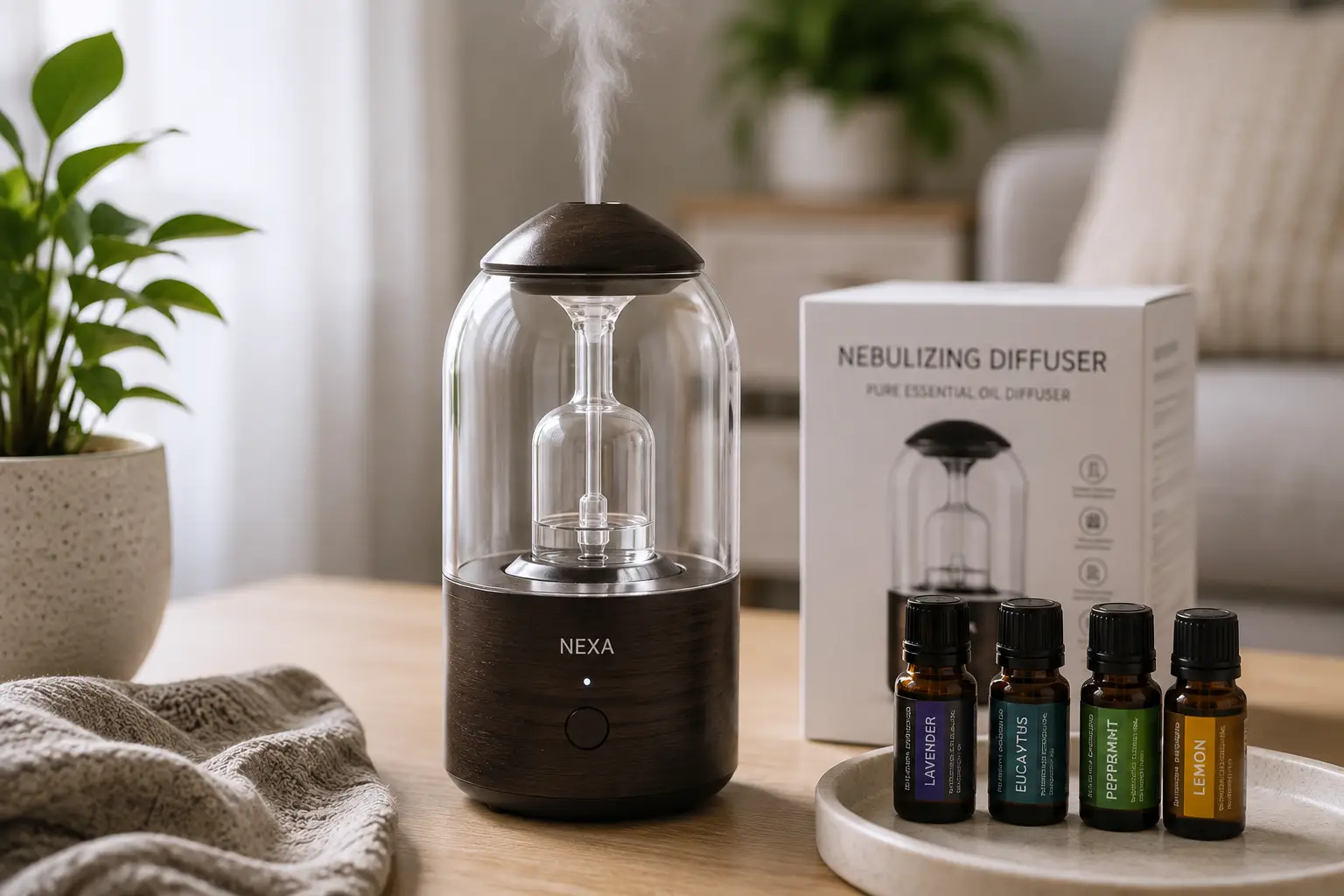
If you’ve ever added water to a diffuser and felt like your lavender oil smelled… diluted, you already understand the appeal of a nebulizing diffuser. Unlike ultrasonic models that mix essential oil with water and vibrate it into a fine mist, a nebulizing diffuser atomizes pure, undiluted oil using nothing but air pressure — no water, no heat, no plastic touching the oil. That matters if you care about scent strength, therapeutic aromatherapy use, or simply not babysitting a water tank every other day.
This guide breaks down seven real, currently available nebulizing diffusers on Amazon, from budget-friendly entry points to commercial-grade units built to scent a lobby. According to the National Center for Complementary and Integrative Health, aromatherapy is one of the most commonly used complementary health approaches in the U.S., which explains why the diffuser market has exploded with options — and why picking the right one can feel overwhelming.
We’re not just listing specs. Every product below comes with honest analysis: what the features actually mean day-to-day, what real reviews consistently say, and who each model genuinely fits. Whether you’re furnishing a yoga studio, a nursery, or a 400-square-foot apartment, there’s a nebulizing diffuser on this list built for it.
Affiliate Disclosure: This post contains affiliate links. As an Amazon Associate, I earn from qualifying purchases made through these links, at no additional cost to you.
Quick Comparison: The 7 Best Nebulizing Diffusers at a Glance
| Product | Best For | Approx. Price | Coverage |
|---|---|---|---|
| Organic Aromas Raindrop 2.0 | Best overall value | around $90–$120 | Medium rooms |
| Organic Aromas Radiance | Premium home aesthetics | around $120–$160 | Medium–large rooms |
| AromaTech AroMini BT Plus | App-controlled scheduling | around $150–$200 | Up to ~1,500 sq ft |
| AromaTech AromaPro | Commercial/large spaces | around $350–$450 | Up to ~4,000 sq ft |
| SpaRoom Aromaluxe Micro-Air | Budget entry point | around $50–$70 | Small–medium rooms |
| The Chateau 200ML Nebulizer | Feature-packed mid-range | around $70–$100 | Medium–large rooms |
| OMSINT Nebulizing Diffuser | Portable/cordless use | around $45–$65 | Small–medium rooms |
Looking at the table above, there’s a clear price ladder here: the SpaRoom Aromaluxe Micro-Air and OMSINT Nebulizing Diffuser compete for the budget slot, the Organic Aromas duo and The Chateau 200ML Nebulizer own the mid-range, and the AromaTech lineup climbs into serious app-controlled and commercial territory. Coverage area matters more than price alone — a $60 unit in a 200-square-foot bedroom will outperform a $400 unit that’s overkill for the space, so match coverage to your room size first.
💬 One click helps other shoppers make an informed choice too! 😊
Top 7 Nebulizing Diffusers: Expert Analysis and Reviews
1. Organic Aromas Raindrop 2.0 — the benchmark for pure oil diffusion
The Organic Aromas Raindrop 2.0 is often the first name that comes up in nebulizing diffuser conversations, and for good reason. Its hand-blown glass reservoir sits on a hardwood base, and the whole thing runs on a whisper-quiet air pump with no plastic touching your oil at any point.
Key features include a 2-minute-on, 1-minute-off auto cycle that prevents oil from evaporating too fast, an optional rainbow LED light carousel, and BPA-free construction throughout. In practice, that auto-cycle means you get consistent scent throw for hours without needing to babysit the unit or worry about it overheating.
This is the pick for anyone who wants true nebulizing performance without stepping into commercial pricing — beginners appreciate the simplicity, while aromatherapy enthusiasts like that pure oil (not a water-oil blend) is actually reaching the air. Reviews consistently praise the elegant, furniture-like design and the strength of the scent throw compared to ultrasonic models, though several buyers note it uses oil noticeably faster than a water-based diffuser.
Pros:
- ✅ Delivers 100% pure, undiluted essential oil scent
- ✅ Elegant glass-and-wood design doubles as home décor
- ✅ No water tank means zero mold or mineral buildup risk
Cons:
- ❌ Burns through oil faster than ultrasonic diffusers
- ❌ Needs periodic isopropyl alcohol cleaning to prevent clogs
Expect to pay around $90–$120 depending on the finish and bundle; check the current listing for exact pricing, as it fluctuates. For the quality of build and true nebulizing output, it’s a strong value at that range.
2. Organic Aromas Radiance — the step-up for larger spaces
The Organic Aromas Radiance takes the same waterless nebulizing formula as the Raindrop and scales it up — a larger glass reservoir, a more assertive pump, and a broader mood-lighting carousel that makes it feel more like a statement piece than a gadget.
The bigger reservoir means longer run time between refills, and the stronger diffusion output covers open-concept living rooms and larger bedrooms more convincingly than entry-level nebulizers. What that means in practice: if you’ve ever felt like a smaller nebulizer “disappears” in a 300+ square foot room, this is the fix, without jumping all the way to a commercial unit.
This model is best suited for buyers who already know they like nebulizing technology and want a more capable, better-looking centerpiece for a living room or primary suite. Reviews aggregated across sellers describe the scent throw as noticeably stronger than the base Raindrop line, with the trade-off being a higher price and a bit more oil consumption per session.
Pros:
- ✅ Stronger diffusion output for larger open rooms
- ✅ Sophisticated design available in multiple wood finishes
- ✅ Larger reservoir means fewer refills per week
Cons:
- ❌ Higher oil consumption than smaller nebulizing models
- ❌ Premium price compared to entry-level nebulizers
Pricing typically runs around $120–$160, again check current availability before buying. For a family room or open living space, the extra output easily justifies the step up from the Raindrop.
3. AromaTech AroMini BT Plus — best for smart scheduling
The AromaTech AroMini BT Plus brings cold-air nebulizing into the smart-home era with full Bluetooth app control, letting you schedule scent intervals, adjust intensity, and turn the unit on or off remotely.
With a 60 mL screw-in bottle system, aluminum housing, and coverage rated up to roughly 1,500 square feet, this unit is built for people who want set-it-and-forget-it scenting across an open floor plan or a small business. The interval cycling (rather than constant misting) is a deliberate design choice — it conserves oil and prevents “nose fatigue,” where a room starts to feel scent-blind after too much continuous exposure.
Who it’s for: anyone who’s outgrown a basic diffuser and wants app-based control comparable to a smart thermostat. Reviewers consistently highlight the strong coverage for a compact unit and the convenience of app scheduling, while the most common friction point is that the system is optimized specifically for AromaTech’s own oil bottles.
Pros:
- ✅ Full Bluetooth app scheduling and remote control
- ✅ Strong coverage for a genuinely compact footprint
- ✅ Premium aluminum build with auto shut-off safety
Cons:
- ❌ Best performance requires AromaTech-branded oil bottles
- ❌ Third-party oils risk clogging and voiding the warranty
Expect a price in the $150–$200 range at the time of writing. If smart scheduling is a priority, this is currently one of the more polished options built specifically for that use case.
4. AromaTech AromaPro — the commercial-grade powerhouse
The AromaTech AromaPro is built for a different job than the rest of this list: scenting genuinely large or commercial spaces, with coverage rated up to about 4,000 square feet. It’s the same heat-free, waterless nebulizing principle as the smaller AromaTech unit, just engineered with a far more powerful pump and, in some configurations, HVAC-ready diffusion hardware for whole-building scenting.
In practice, this means hotels, spas, dental offices, and large open-plan homes can run one unit instead of three or four smaller diffusers scattered around. The trade-off for that power is a noticeably higher price point and a learning curve around oil consumption — a unit built to scent 4,000 square feet will go through oil faster than a bedroom diffuser, so budget for refills accordingly.
This is squarely an option for buyers with a genuine large-space need — a small apartment doesn’t need this much diffusion power, and the price reflects that positioning. Aggregated reviews from commercial buyers describe reliable, consistent output over long operating hours, which is exactly what a business needs from equipment that runs daily.
Pros:
- ✅ Covers genuinely large spaces up to ~4,000 sq ft
- ✅ Heat-free nebulizing preserves full oil integrity
- ✅ Built for continuous, daily commercial-duty use
Cons:
- ❌ Premium price point relative to home-use diffusers
- ❌ Overkill (and wasteful on oil) for smaller rooms
Pricing generally sits around $350–$450; always confirm the current listing price before purchase since commercial equipment pricing shifts more than consumer goods. For anyone scenting a business or an unusually large home, it’s the clearest justification for the spend on this list.
5. SpaRoom Aromaluxe Micro-Air Nebulizing Diffuser — best budget entry point
The SpaRoom Aromaluxe Micro-Air Nebulizing Diffuser proves you don’t need a three-figure budget to get true nebulizing technology. Its “Micro-Air” engine is compact but still relies on air pressure — not water and vibration — to atomize pure oil.
The smaller reservoir and motor size keep the price down, which naturally means it’s best matched to bedrooms, home offices, or bathrooms rather than open floor plans. What that trade-off means in real terms: you’re getting genuine nebulizing purity at an ultrasonic-diffuser price point, provided you’re realistic about the square footage it can handle.
This is the pick for someone who wants to try nebulizing diffusion without committing AromaPro-level money, or as a second unit for a smaller room in a home that already has a larger diffuser elsewhere. Reviews commonly mention that it’s a good “gateway” into nebulizing technology, with the main caveat being it can’t match the scent throw of larger units in bigger spaces.
Pros:
- ✅ True nebulizing technology at a budget-friendly price
- ✅ Compact size fits easily on a nightstand or shelf
- ✅ Simple, low-learning-curve operation
Cons:
- ❌ Underpowered for large or open-concept rooms
- ❌ Smaller reservoir means more frequent refills
Typical pricing lands around $50–$70. For the price, it’s a smart way to test whether nebulizing diffusion is worth the upgrade from an ultrasonic model you already own.
6. The Chateau 200ML Nebulizer — most settings for the price
The Chateau 200ML Nebulizer stands out on Amazon for packing an LCD display and a genuinely long list of adjustable settings — timer intervals, mist intensity, and operating modes — into a mid-range, water-free nebulizing unit.
The larger 200 mL capacity and multiple intensity settings mean it’s positioned for medium-to-large rooms without stepping into AromaTech AromaPro pricing. What the LCD display actually buys you is precision: instead of guessing at interval timing, you can dial in exactly how many minutes on/off suit your room size and oil budget.
This model fits buyers who want more granular control than the simpler Organic Aromas units offer, without paying for Bluetooth connectivity they may not use. Aggregated buyer feedback highlights the flexibility of the settings as the standout feature, with occasional notes that the digital interface has a slight learning curve compared to a single on/off switch.
Pros:
- ✅ Extensive customizable timer and intensity settings
- ✅ Larger 200 mL capacity suits bigger rooms
- ✅ Clear LCD display for precise control
Cons:
- ❌ Digital controls take longer to learn than simple switches
- ❌ Bulkier footprint than minimalist glass diffusers
Expect pricing in the $70–$100 range, subject to change. If you like tinkering with settings to get scent output exactly right, this is one of the more configurable nebulizers at this price tier.
7. OMSINT Nebulizing Diffuser — best for portability
The OMSINT Nebulizing Diffuser takes the wood-and-glass nebulizing formula and makes it cordless and rechargeable, which is the detail that separates it from most of the plugged-in units on this list.
Because it runs on an internal battery rather than a constant power cord, you can move it from a home office to a bedroom to a yoga mat setup without hunting for an outlet. That flexibility matters more than it sounds — one of the most common frustrations with nebulizing diffusers generally is that a single unit gets “stuck” wherever the nearest outlet happens to be.
This is the right call for renters, small-space dwellers, or anyone who wants one diffuser that travels between rooms rather than buying multiples. Reviews tend to single out the portability as the deciding factor buyers valued most, with battery life between charges being the most-mentioned limitation.
Pros:
- ✅ Cordless, rechargeable design for true portability
- ✅ Attractive wood-and-glass build at a lower price point
- ✅ No heat or water — pure oil diffusion on the go
Cons:
- ❌ Battery life limits continuous run time between charges
- ❌ Smaller reservoir than plugged-in nebulizing models
Typical pricing runs around $45–$65. For anyone who genuinely needs a diffuser that isn’t tied to one outlet, it’s a smart, budget-conscious pick.
Getting Started: Setup, First 30 Days & Maintenance Tips
Unboxing your new nebulizing diffuser is the easy part — getting the most out of it in the first month is where most buyers either fall in love with the technology or quietly stop using it. Start by placing the unit on a flat, stable surface away from direct sunlight and drafts, since airflow can scatter the mist before it disperses evenly through the room.
For the first week, run shorter sessions (15–30 minutes) rather than hours-long cycles, both to let you gauge how strong you want the scent and to avoid overwhelming a small space — remember, nebulizing diffusers put out pure, concentrated oil, not a diluted mist. Most units, including the Organic Aromas Raindrop 2.0 and The Chateau 200ML Nebulizer, include built-in interval cycling for exactly this reason.
Maintenance is the part people skip and later regret. Every one to two weeks, run a few drops of isopropyl alcohol (90%+) through the nebulizer to dissolve any oil residue that’s starting to thicken inside the tube — this is the single most common cause of clogging and reduced mist output. Battery-powered models like the OMSINT Nebulizing Diffuser should be charged fully before first use and periodically cycled (drained and recharged) to preserve battery health long-term, similar to how you’d treat a phone or laptop battery.
Real-World Scenarios: Matching a Nebulizing Diffuser to Your Life
The apartment renter with one outlet to spare: If you live in a studio or one-bedroom and want flexibility over raw power, the OMSINT Nebulizing Diffuser or SpaRoom Aromaluxe Micro-Air make more sense than anything AromaTech-branded — you’re paying for portability and a manageable footprint, not square footage coverage you’ll never use.
The remote worker who wants a “focus scent” on a schedule: If you work from a home office and want peppermint or citrus diffusing automatically during work blocks (and off during calls), the AromaTech AroMini BT Plus is built exactly for this — the app scheduling does the thinking for you once it’s set up.
The small business owner scenting a lobby or studio: A yoga studio, dental office, or boutique retail space needs consistent, all-day coverage across hundreds of square feet, which is where the AromaTech AromaPro earns its higher price tag — smaller units simply weren’t engineered for that duty cycle.
The design-conscious homeowner: If the diffuser needs to look intentional sitting on a console table, not hidden in a closet, the Organic Aromas Radiance or Organic Aromas Raindrop 2.0 double as home décor while still delivering genuine nebulizing performance.
Solving the 5 Most Common Nebulizing Diffuser Problems
Problem: The mist output has weakened over time. This is almost always residue buildup inside the nebulizer tube. Solution: run isopropyl alcohol through the unit (per your model’s manual) every 1–2 weeks, especially if you diffuse thicker oils like patchouli or sandalwood, which leave more residue than citrus oils.
Problem: The scent fades faster than expected in a large room. Solution: match coverage to room size — a unit like the SpaRoom Aromaluxe Micro-Air simply isn’t built for open floor plans. Stepping up to the Organic Aromas Radiance or AromaTech AroMini BT Plus solves this without needing multiple small units.
Problem: The diffuser seems to burn through oil unusually fast. Nebulizing diffusers are inherently more oil-hungry than ultrasonic models because they diffuse pure oil, not a water-diluted mist. Solution: rely on interval/auto-cycle settings rather than continuous operation, and diffuse in shorter, scheduled bursts.
Problem: App/Bluetooth connectivity keeps dropping. Solution: keep the diffuser within standard Bluetooth range of your router or phone, and check for firmware updates in the manufacturer’s app — a common but overlooked fix for models like the AromaTech AroMini BT Plus.
Problem: The unit stops misting altogether. Before assuming it’s broken, check the oil bottle level and the tube for visible clogging. Nine times out of ten this is a maintenance issue, not a hardware failure, and a thorough alcohol cleaning resolves it.
What Is a Nebulizing Diffuser?
A nebulizing diffuser is a device that atomizes pure, undiluted essential oil into a fine mist using air pressure alone — no water, no heat, and typically no plastic contact with the oil. Because nothing dilutes the oil, nebulizing diffusers generally produce a stronger, more concentrated scent throw than ultrasonic or heat-based diffusers, which is why they’re popular for larger rooms and dedicated aromatherapy use.
How to Choose a Nebulizing Diffuser: 7 Expert Criteria
- Match coverage to your actual room size. A unit rated for 1,500+ square feet is wasted (and wasteful on oil) in a 150-square-foot bedroom.
- Decide how much you value app/smart control. If you want scheduling and remote control, prioritize Bluetooth-enabled models like the AromaTech AroMini BT Plus.
- Factor in oil consumption, not just sticker price. Nebulizing diffusers use more oil than ultrasonic models, so a cheaper unit can cost more over a year of use.
- Consider noise tolerance. Nebulizing pumps are generally quiet but not silent — check reviews if you’re placing one in a bedroom.
- Think about portability needs. If the diffuser needs to move between rooms, a cordless option like the OMSINT Nebulizing Diffuser beats a plugged-in unit.
- Weigh design against function. If the diffuser will sit in a visible living space, glass-and-wood models like the Organic Aromas line double as décor.
- Check maintenance requirements before buying. Every nebulizing diffuser needs periodic alcohol cleaning — factor that into your realistic time budget.
Nebulizing Diffuser vs. Ultrasonic Diffuser: Which One Wins?
| Factor | Nebulizing Diffuser | Ultrasonic Diffuser |
|---|---|---|
| Oil dilution | None — pure oil | Mixed with water |
| Scent strength | Stronger, more concentrated | Milder, gentler |
| Water tank/mold risk | None | Present |
| Oil consumption | Higher | Lower |
| Typical price | Mid to high | Low to mid |
| Best for | Larger rooms, strong scent throw | Small rooms, humidification |
Neither format is objectively “better” — it depends on priorities. If you want maximum scent strength and don’t mind higher oil usage, a nebulizing diffuser like the Organic Aromas Raindrop 2.0 wins outright. If you want gentle scenting plus some ambient humidity in a smaller room, an ultrasonic model may actually suit you better, and that’s a legitimate reason to skip nebulizing technology altogether.
✨ Don’t miss these exclusive deals!
🔍 Ready to Upgrade Your Home’s Scent?
Take your aromatherapy routine to the next level with a lineup of nebulizing diffusers built for real rooms and real budgets. Click a highlighted pick above to check current pricing and availability — these picks will help you create a home that smells intentional, not accidental.
Common Mistakes to Avoid When Buying a Nebulizing Diffuser
The most common mistake is buying based on price alone without checking coverage ratings — a budget diffuser in a great room will leave you disappointed regardless of how well-reviewed it is elsewhere. The second most common mistake is ignoring maintenance requirements entirely; nebulizing diffusers that aren’t cleaned regularly will clog and underperform within weeks, leading buyers to wrongly conclude the product itself is defective.
Buyers also frequently overlook oil compatibility. Some nebulizing diffusers, including certain AromaTech models, are optimized for the brand’s own oil bottles, and using thick or additive-heavy third-party oils can clog the nebulizer and void the warranty — always check compatibility before stocking up on oils. Finally, it’s worth remembering that not every “diffuser” sold on Amazon is a true nebulizer; the Consumer Product Safety Commission has recalled detachable diffuser components over ingestion hazards in homes with small children, which is a good reminder to check safety certifications and read the fine print rather than assuming all diffuser types are interchangeable or risk-free.
Safety, Regulations, and Standards
Nebulizing diffusers themselves aren’t subject to a dedicated federal safety standard the way, say, humidifiers are, but general product safety rules still apply — look for UL or ETL listing on the power adapter, and keep any unit with small magnetic or detachable parts away from young children. Because nebulizing diffusers release concentrated, undiluted essential oil compounds into the air, it’s also worth understanding basic indoor air quality guidance: the EPA notes that many essential oil products emit volatile organic compounds (VOCs), and recommends adequate ventilation when using any scenting product for extended periods, nebulizing diffusers included.
In practice, this means running your diffuser in a room with some airflow (a cracked window or open door) rather than a fully sealed space, particularly during longer sessions. If you have household members with asthma, allergies, or fragrance sensitivities, start with shorter, less frequent sessions and monitor how the space feels before committing to all-day diffusing.
Long-Term Cost and Maintenance
The sticker price on a nebulizing diffuser is only part of the real cost. Because these units diffuse pure oil rather than a diluted mist, expect to go through a 10–15 mL bottle of essential oil considerably faster than you would with an ultrasonic diffuser — often within a couple of weeks of regular use, depending on session length. Budget accordingly: a $60 diffuser paired with frequent oil purchases can cost more over a year than a $150 diffuser used more sparingly with interval cycling.
Cleaning supplies (isopropyl alcohol and basic tools) are a minor recurring cost, typically just a few dollars every couple of months. Higher-end units like the AromaTech AromaPro also tend to have more available replacement parts and accessories, which can extend the usable life of the unit well beyond cheaper alternatives that may not have parts support if something wears out. For a deeper look at how fragrance products affect indoor spaces over time, UMass Amherst’s Environmental Health & Safety office has a helpful breakdown of air freshener and scenting product considerations worth reading before committing to daily use.
Features That Actually Matter (and Ones That Don’t)
What actually matters: true waterless nebulizing technology (not a rebranded ultrasonic unit), accurate coverage ratings, auto shut-off or interval cycling, and easy access for cleaning. These directly affect scent quality, safety, and how long the unit lasts.
What matters less than marketing suggests: multi-color LED light shows (nice, but irrelevant to diffusion performance), oversized reservoirs on units meant for small rooms (you’ll rarely fill them anyway), and “extra loud” claims of coverage that aren’t backed by an actual square-footage rating. If a listing doesn’t specify coverage in square feet, treat that as a yellow flag rather than assuming it’ll perform like the premium options on this list.
FAQs
❓ What's the difference between a nebulizing diffuser and a regular essential oil diffuser?
❓ Is a nebulizing diffuser worth the extra cost?
❓ How often should I clean my nebulizing diffuser?
❓ Can I use any essential oil in a nebulizing diffuser?
❓ What size room does a nebulizing diffuser cover?
Conclusion
Choosing the best nebulizing diffuser really comes down to matching coverage, features, and price to how you actually plan to use it. If you want a reliable, well-reviewed all-rounder, the Organic Aromas Raindrop 2.0 remains one of the safest recommendations on this list — genuine nebulizing performance at a reasonable price. If your space is bigger or you want app-based scheduling, the AromaTech AroMini BT Plus or, for true commercial coverage, the AromaTech AromaPro are worth the higher investment. And if budget or portability is the priority, the SpaRoom Aromaluxe Micro-Air and OMSINT Nebulizing Diffuser both deliver real nebulizing technology without the premium price tag.
Whichever you choose, remember that a nebulizing diffuser is a different tool than the ultrasonic diffuser you may already own — stronger, purer, and a little more oil-hungry — and setting realistic expectations around maintenance and oil consumption from day one will make you far happier with the purchase six months from now.
✨ Found the Right Nebulizing Diffuser for You?
Take a look back at the comparison table, pick the option that matches your room size and budget, and click through to check today’s availability and pricing before it changes.
Recommended for You
- MLM Essential Oils: 7 Honest Alternatives That Cost Less in 2026
- Lifelines Plant Diffuser Review: 7 Best Picks for 2026
- Hotel Lobby Fragrance: 7 Best Diffusers to Try in 2026
Disclaimer: This post contains affiliate links. As an Amazon Associate, I earn from qualifying purchases made through these links, at no additional cost to you.
✨ Found this article helpful? Share it with someone who needs it! 💬🤗