
In This Article
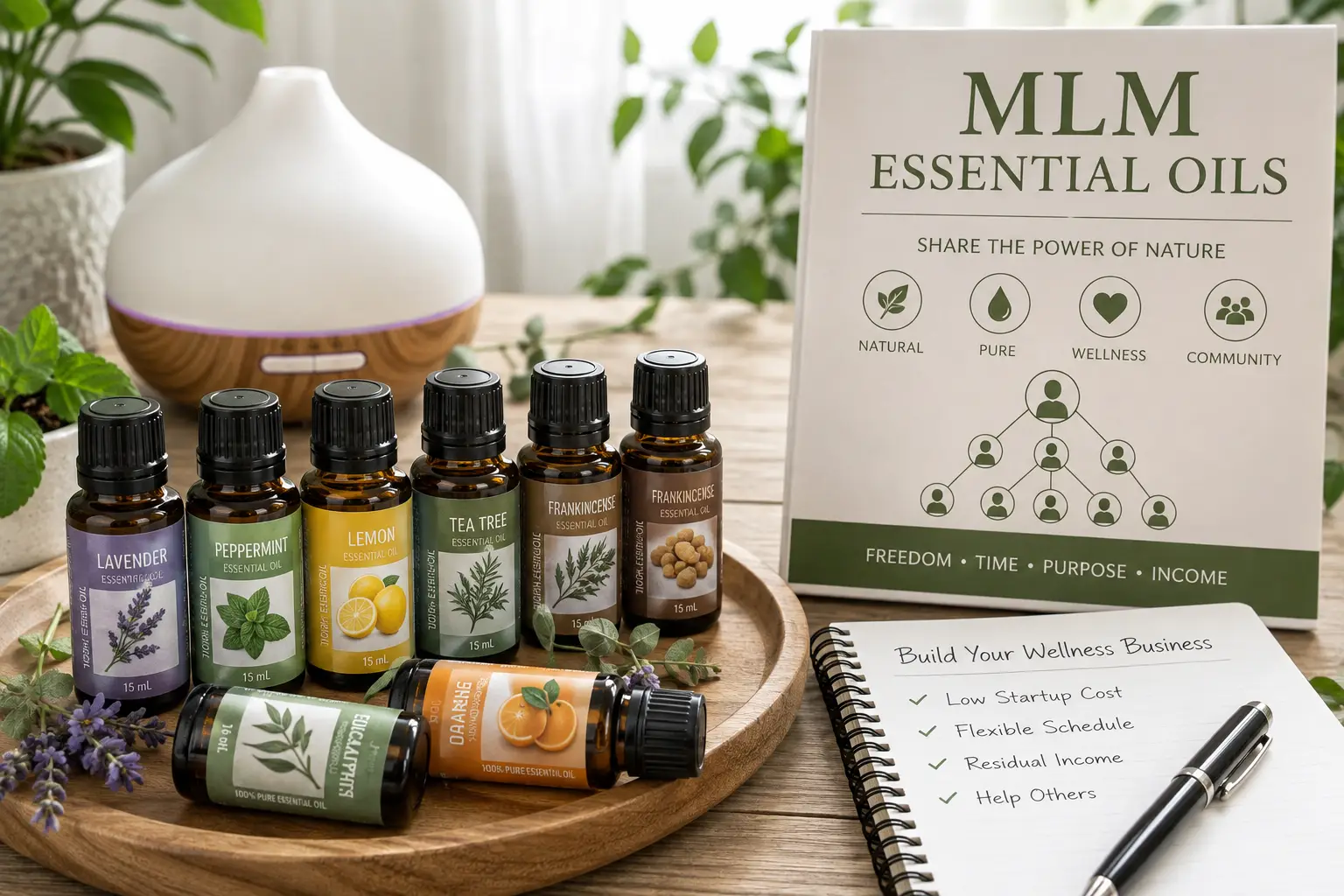
If you’ve searched for mlm essential oils, you’ve probably already met a friend-of-a-friend selling doTERRA or Young Living at a living-room “wellness class,” or you’re wondering whether the markup that comes with a distributor network is actually worth it. Here’s the short version: mlm essential oils are essential oils sold through multi-level marketing companies, where independent distributors earn commissions on their own sales and on sales made by people they recruit, rather than through a traditional retail storefront. That structure changes the price you pay far more than it changes what’s actually in the bottle.
This guide breaks down how the MLM essential oil model works, what regulators have actually said about the health and income claims tied to it, and — most usefully — seven real, independently tested essential oil products available on Amazon that deliver comparable or better purity without the recruitment pitch or the markup. Whether you’re a longtime doTERRA or Young Living customer rethinking your subscription, or you’re brand new to aromatherapy and trying to avoid an expensive first mistake, you’ll leave with a clear, evidence-based comparison instead of a sales pitch.
We’ll cover pricing structure, purity testing standards like GC/MS analysis, what federal regulators have flagged about mlm essential oils marketing claims, and a practical framework for choosing oils that match your actual needs — not your neighbor’s sales quota.
MLM Essential Oils vs. Independent Brands: Quick Comparison
Before diving into individual products, here’s a snapshot of how the mlm essential oils model stacks up against the independent, non-MLM brands we’ll cover in detail below.
| Model | Typical Price (10 mL) | Distribution | Purity Testing Transparency | Best For |
|---|---|---|---|---|
| MLM essential oils (doTERRA, Young Living) | Around $12–$45 | Distributor/consultant network | Internal, not independently published | Buyers who value community and don’t mind paying a premium |
| Plant Therapy | Around $6–$14 | Direct-to-consumer + Amazon | Published batch-specific GC/MS reports | Best all-around value |
| Rocky Mountain Oils | Around $10–$30 | Direct-to-consumer + Amazon | Published GC/MS + farm sourcing detail | Premium non-MLM buyers |
| Cliganic | Around $4–$10 | Amazon-first | Third-party purity testing disclosed | Budget-conscious beginners |
Looking at the table above, the price gap is the headline: independent brands routinely charge roughly a third to half of what comparable mlm essential oils cost for the same 10 mL bottle of a common oil like lavender or peppermint, largely because the MLM price has to fund multiple layers of distributor commissions rather than just production and testing. That doesn’t automatically make MLM oils lower quality — but it does mean you’re paying for the compensation structure, not for extra purity, since none of these companies (MLM or independent) currently have their “grade” claims validated by any government body.
💬 Curious how the individual products stack up? Keep scrolling — the full breakdown (with pros, cons, and honest pricing) is just below.
The 7 Best Non-MLM Essential Oil Alternatives on Amazon
Every product below is a real, purchasable item on amazon.com, chosen to cover entry-level, mid-range, and premium budgets, plus a few lesser-known picks that punch above their price. Each one has been evaluated on published purity testing, aggregated verified-buyer sentiment, and how it stacks up against typical mlm essential oils in both quality and cost.
1. Plant Therapy Top 6 USDA Organic Essential Oil Set — best all-around value
The distinguishing benefit here is simple: you get USDA-certified organic lavender, peppermint, eucalyptus, lemon, and tea tree oil in one set, at a fraction of what a comparable mlm essential oils starter kit costs. Plant Therapy publishes batch-specific GC/MS (gas chromatography-mass spectrometry) reports for every bottle it sells, which means you can look up the actual chemical composition of the exact batch you received rather than taking a marketing claim on faith. In practice, that transparency is the single biggest differentiator between this brand and most MLM essential oils, whose internal testing protocols aren’t published for public review.
Plant Therapy’s oils are formulated with beginners in mind, which makes this set a smart first purchase if you’re transitioning away from a subscription-based mlm essential oils program and want a comparable “starter kit” experience without the sign-up. Certified aromatherapists staff their customer support line, which matters if you’re diluting oils for topical use for the first time and aren’t sure about ratios. Reviews consistently report strong satisfaction with scent authenticity and bottle-to-bottle consistency, with the most common critique being that a few of the blend caps can be finicky for controlled dosing.
Pros:
- ✅ Published batch-specific GC/MS purity reports
- ✅ USDA organic certification on every oil in the set
- ✅ Certified aromatherapists available for support
Cons:
- ❌ Some buyers report inconsistent dropper caps
- ❌ Smaller 10 mL bottles mean frequent reordering for daily diffuser use
At around $25–$35 for the full six-oil organic set, Plant Therapy delivers roughly the same everyday oils a new mlm essential oils distributor would push in an introductory kit, at a noticeably lower per-milliliter cost — making it the best value pick on this list.
2. Eden’s Garden Top 6 Synergy Blends Set — best pre-blended starter kit
Eden’s Garden stands out for pre-mixed synergy blends — like Breathe Easier and Stress Relief — that skip the DIY blending step entirely, which is exactly the convenience most new mlm essential oils customers are actually paying extra for. Each blend is formulated by an in-house aromatherapist rather than crowd-sourced from distributor recipe swaps, so the ratios are calibrated for safe topical dilution out of the bottle. The company doesn’t operate a recruitment or commission structure at all — it’s a straightforward retail brand, which is reflected in noticeably lower prices for comparable blend complexity.
For someone who found the “wellness class” pitch of MLM essential oils appealing because a distributor handed them a pre-made blend for a specific problem, this is the direct non-MLM equivalent: someone else has already done the formulation work. Aggregated reviews frequently mention the bottles’ amber glass quality and the inclusion of blend “recipe cards,” while a recurring complaint is that a couple of the citrus-forward blends fade faster in scent intensity than the earthier ones.
Pros:
- ✅ Aromatherapist-formulated blends, not just single oils
- ✅ No recruitment structure — pure retail pricing
- ✅ Blend usage cards included for beginners
Cons:
- ❌ Citrus blends can lose potency faster than average
- ❌ Smaller overall single-oil catalog than some competitors
Priced around $20–$30 for a six-blend set, Eden’s Garden is a strong pick for anyone who liked the “someone did the thinking for me” convenience of mlm essential oils but not the price tag attached to it.
3. Rocky Mountain Oils Top 6 Essential Oil Set — premium non-MLM alternative
If your main hesitation about leaving mlm essential oils is losing that “premium, farm-direct” feeling, Rocky Mountain Oils is built to answer exactly that. The company publishes sourcing detail down to the growing region for many of its oils and backs every batch with third-party GC/MS testing, positioning itself as a direct, non-distributor premium option. Its pricing sits closer to MLM territory than the budget picks on this list, but you’re paying for sourcing transparency and testing rigor rather than a compensation plan layered on top.
This is the pick for buyers who specifically want the “artisanal, small-batch” experience that MLM essential oils marketing leans on heavily, minus the recruitment pitch. Reviews consistently highlight strong, true-to-plant scent profiles on the floral and woody oils in particular, while a recurring critique is that the price premium over Plant Therapy or Cliganic is hard to justify for oils used mainly for casual diffusing rather than therapeutic-level topical work.
Pros:
- ✅ Detailed public sourcing and origin information
- ✅ Third-party GC/MS testing on every batch
- ✅ Strong reputation for floral and woody oil authenticity
Cons:
- ❌ Priced closer to MLM territory than budget alternatives
- ❌ Premium may not be worth it for casual/occasional users
Expect to pay around $50–$80 for a premium six-oil set, which makes Rocky Mountain Oils the closest apples-to-apples price comparison to mlm essential oils on this list — with published testing data MLM brands generally don’t disclose.
4. NOW Foods Essential Oils (Single Oils) — most widely available budget pick
NOW Foods has been manufacturing essential oils and supplements since long before “wellness MLM” became a category, and its oils are sold in mainstream retailers as well as on Amazon — meaning you can physically pick up a bottle before committing to a full order, something no mlm essential oils company offers outside of a distributor’s home stock. The company operates its own GMP-certified manufacturing facilities and publishes general quality-control information, though its per-batch reporting isn’t as granular as Plant Therapy’s or Rocky Mountain Oils’.
This is the practical, no-frills option for someone who just wants reliable lavender or peppermint oil for a diffuser without paying for blend curation or subscription perks. Aggregated customer sentiment is strongly positive on value-for-money and consistency across reorders, with the most common complaint being that the packaging feels more “supplement aisle” than “spa,” which some buyers coming from a polished MLM essential oils presentation find underwhelming.
Pros:
- ✅ Sold in physical retail stores nationwide, not just online
- ✅ GMP-certified manufacturing facilities
- ✅ Very low cost per bottle for reordering staples
Cons:
- ❌ Less granular batch-specific testing disclosure
- ❌ Basic packaging compared to boutique competitors
At around $8–$15 per single oil, NOW Foods is the cheapest reliable way to replace the everyday singles — lavender, peppermint, tea tree — that make up most mlm essential oils starter orders.
5. Aura Cacia Organic Essential Oils — best for grocery-store convenience
Aura Cacia has quietly become one of the most trusted names in essential oils by being everywhere — Whole Foods, Target, natural grocers, and Amazon — without ever adopting a distributor sales model. Many of its oils carry USDA organic certification, and the brand has published sourcing partnerships with farming cooperatives for decades, predating the “ethical sourcing” language that MLM essential oils marketing now leans on heavily. It’s a reasonable middle ground between NOW Foods’ bare-bones pricing and Plant Therapy’s more clinical testing transparency.
For someone who wants to walk into a physical store, smell-test a bottle, and walk out with an oil the same day, Aura Cacia solves a problem mlm essential oils fundamentally can’t: instant, no-commitment access. Reviews frequently praise the brand’s approachable labeling for beginners, while a recurring theme in feedback is that a handful of the fragrance-oil blended products (as opposed to the 100% pure line) get mistaken for pure essential oils by first-time buyers, so reading the label carefully matters.
Pros:
- ✅ Available same-day in mainstream grocery and retail stores
- ✅ Many oils carry USDA organic certification
- ✅ Long-standing, transparent farming partnerships
Cons:
- ❌ Product line mixes pure oils with fragrance blends — read labels closely
- ❌ Testing disclosure less detailed than Plant Therapy or Rocky Mountain Oils
Priced around $10–$20 per bottle, Aura Cacia is the pick for shoppers who valued the “grab it and go” convenience of a local MLM essential oils distributor but want a transparent retail alternative instead.
6. Cliganic USDA Organic Top 5 Essential Oil Set — best budget starter set
Cliganic has become one of Amazon’s best-selling essential oil sets for a reason: it delivers USDA-certified organic peppermint, lavender, eucalyptus, lemongrass, and orange oils at a price point roughly a third of what a comparable mlm essential oils starter kit costs. The brand discloses third-party purity testing and leans hard into the organic certification as its core differentiator, which matters because organic certification is a verifiable third-party standard — unlike marketing terms like “therapeutic grade,” which has no legal or industry-standard definition in the United States.
This is the pick for someone testing the aromatherapy waters for the first time and unwilling to commit real money before knowing whether they’ll actually use the oils regularly. Aggregated reviews are strongly positive on scent strength and value, with a recurring critique that the smaller bottle sizes mean frequent-diffuser households will reorder faster than the price-per-set initially suggests.
Pros:
- ✅ USDA organic certification at a budget price point
- ✅ Consistently one of Amazon’s top-rated organic sets
- ✅ Third-party purity testing disclosed
Cons:
- ❌ Smaller bottle sizes mean faster reordering for daily use
- ❌ Fewer specialty/rare oils than premium competitors
At around $15–$25 for the five-oil organic set, Cliganic is the lowest-risk way to try aromatherapy before deciding whether it’s worth investing further — MLM or not.
7. Majestic Pure Lavender Essential Oil Gift Set — best gift-oriented pick
Majestic Pure carved out a niche as the gift-set specialist of the essential oil world, with polished packaging and curated collections that mirror the “welcome kit” feel many new mlm essential oils distributors receive when they sign up — minus the sign-up. The lavender-focused sets in particular get strong marks for scent quality relative to price, and the company discloses general purity and sourcing information, though not to the batch-specific GC/MS level of Plant Therapy or Rocky Mountain Oils.
If your interest in mlm essential oils started because someone gave you a beautifully packaged starter set as a gift, this is the retail equivalent you can buy for someone else (or yourself) without any recruitment strings attached. Reviews consistently praise the presentation and lavender scent authenticity, while a common critique is that the non-lavender oils in mixed sets are noticeably less impressive than the brand’s signature scent.
Pros:
- ✅ Gift-ready packaging and presentation
- ✅ Strong, consistent lavender scent quality
- ✅ Affordable way to introduce someone else to aromatherapy
Cons:
- ❌ Non-lavender oils in mixed sets are less consistently praised
- ❌ Less detailed batch-testing transparency than top-tier competitors
Priced around $15–$30 depending on set size, Majestic Pure is the practical, no-commitment gift alternative to handing someone an MLM sign-up link.
Switching Away From MLM Essential Oils: A Practical How-To Guide
If you’re already sitting on a stash of mlm essential oils and want to transition without wasting what you’ve bought, don’t throw anything out — most single oils and blends store well for one to three years in a cool, dark place, so use up your existing bottles first while you research replacements.
Start your transition with the one or two oils you use daily (lavender and peppermint are the most common) rather than replacing your entire collection at once; this lets you compare scent and performance side-by-side before committing to a full switch. Cancel any recurring “Loyalty Rewards”-style subscription before you order elsewhere, since most mlm essential oils programs auto-ship monthly unless you actively pause or cancel — check your account settings or contact the company directly, since cancellation policies vary by brand. When your new bottles arrive, do a simple side-by-side sniff test against your old stock; genuine essential oils from reputable brands, MLM or not, should smell recognizably like the plant itself rather than a candle-aisle approximation. Finally, keep any GC/MS reports or certificates of analysis your new brand publishes on file — if you ever have a reaction or question about a specific batch, that documentation is what a healthcare provider will actually want to see.
Real-World Scenarios: Which Alternative Fits You
The former MLM distributor on a budget. If you joined an mlm essential oils program mainly for the oils (not the business opportunity) and want comparable everyday singles without the markup or the monthly auto-ship pressure, NOW Foods or Cliganic replace your lavender-peppermint-tea tree rotation at roughly a third of the cost, with no subscription commitment.
The wellness enthusiast who wants documentation. If purity testing and sourcing transparency matter more to you than price, Plant Therapy or Rocky Mountain Oils give you the batch-specific GC/MS reports that most mlm essential oils companies simply don’t publish for public review — letting you verify claims instead of trusting a distributor’s word.
The first-timer who isn’t sure they’ll stick with it. If you’re aromatherapy-curious but wary of investing much before knowing whether you’ll actually use the oils, Cliganic‘s budget organic set or Majestic Pure‘s gift set let you test the waters for under $25 with no ongoing commitment of any kind.
Common Essential Oil Problems and Practical Solutions
Problem: You don’t know if your current oil is actually pure. Solution: look for a brand that publishes batch-specific GC/MS reports (Plant Therapy and Rocky Mountain Oils both do this); if a brand — MLM or independent — can’t show you third-party lab data for the exact batch you bought, that’s a transparency gap worth weighing.
Problem: You’re locked into a subscription you don’t want. Solution: most mlm essential oils “loyalty” programs allow cancellation through your online account or by contacting customer service directly; document your cancellation confirmation in case of billing disputes.
Problem: You’re not sure how to dilute oils safely for topical use. Solution: follow published dilution guidelines from a recognized aromatherapy body — most home topical blends should sit in the 1-5% dilution range in a carrier oil — and when in doubt, favor inhalation/diffusion, which carries a lower risk profile than skin application.
Problem: You’ve seen health claims attached to mlm essential oils and don’t know what’s verified. Solution: treat any claim that an oil can prevent, treat, or cure a specific disease with real skepticism — the FTC has taken formal action against distributors of a major MLM essential oil company for exactly this kind of unsubstantiated claim, and no essential oil is FDA-approved to treat or cure any disease.
How to Choose Essential Oils (MLM or Not)
- Check for published purity testing. Look specifically for batch-specific GC/MS reports, not just a general “we test our oils” statement — the batch-specific detail is what lets you verify the bottle you actually bought.
- Verify organic certification independently. USDA organic is a legally regulated, third-party-audited label; “therapeutic grade” and “certified pure” are marketing terms with no legal definition in the U.S. essential oil industry.
- Compare price per milliliter, not per bottle. Bottle sizes vary widely between brands, so a seemingly cheaper mlm essential oils bottle can actually cost more per milliliter than a larger independent-brand bottle.
- Read the ingredient list for “pure” vs. blended products. Some budget lines mix synthetic fragrance oils into blends labeled loosely as “essential oil products” — reserve your highest scrutiny for single, unblended oils if purity is your priority.
- Ask whether the company sells factory-direct or through a distributor markup. Every layer of distributor commission in an MLM structure has to be funded somewhere, and it’s typically funded by retail price.
- Look at return and satisfaction policies. Reputable independent brands generally offer straightforward return policies without requiring an active distributor account to process a refund.
- Match the oil to a genuine, low-risk use case. Diffusing for scent is low-risk; topical use requires proper dilution; internal use should only happen under the guidance of a qualified healthcare provider, regardless of brand.
MLM Essential Oils vs. Independent Retail Brands
The core difference isn’t what’s inside the bottle — it’s the business model funding the bottle. mlm essential oils companies like doTERRA and Young Living compensate a network of independent distributors through commissions on both personal sales and recruited “downline” sales, which is a structurally different cost driver than a traditional retailer’s overhead. Independent brands like Plant Therapy and Eden’s Garden sell factory-direct or through standard retail channels, which is why their comparable oils tend to run noticeably cheaper per milliliter.
That price gap isn’t automatically a quality signal in either direction. What is worth weighing seriously: regulators have specifically scrutinized mlm essential oils marketing for both health claims and income claims. The Federal Trade Commission has sent warning letters and, in some cases, brought enforcement action against MLM essential oil distributors for claims that products could treat or prevent illness, and the National Advertising Division found that major mlm essential oils companies could not substantiate several “therapeutic grade” health claims when formally challenged by a competitor. Independent brands generally don’t carry the same recruitment-driven incentive for individual sellers to embellish claims, since there’s no downline commission riding on convincing you a specific oil will fix a specific health problem.
Common Mistakes to Avoid When Buying Essential Oils
Don’t assume a higher price means higher purity — price in the mlm essential oils model reflects the compensation structure at least as much as it reflects production cost, so use published testing data, not price, as your quality signal. Don’t buy unbranded, ultra-cheap bulk sets (think 20+ oils for under $20) from unfamiliar Amazon sellers; independent testing of this category has repeatedly turned up undisclosed dilution and synthetic fillers with no real botanical content. Don’t take “clinically proven” or “doctor recommended” claims at face value without checking whether they’re tied to a specific published study rather than a general endorsement. Don’t sign up for a recurring auto-ship subscription — MLM or retail — before you know how much of a given oil you actually use in a typical month. And don’t apply any undiluted essential oil directly to skin, regardless of brand reputation; proper carrier-oil dilution is a safety step, not a suggestion.
Are MLM Essential Oils a Pyramid Scheme? Understanding the Business Model
This is one of the most common questions behind the mlm essential oils search itself, and the honest answer is nuanced. Legally, a multi-level marketing company is distinct from an illegal pyramid scheme if the majority of revenue comes from actual product sales to end consumers rather than from recruiting new distributors who primarily buy inventory themselves. Companies like doTERRA and Young Living maintain that their revenue is genuinely product-driven, and neither has been shut down as an illegal pyramid scheme by federal regulators.
That said, regulatory scrutiny has focused specifically on the income claims made by individual distributors, not just health claims. Watchdog groups tracking MLM advertising have documented a pattern: investigations into major essential oil MLM income claims found a consistent gap between what distributors are told they can earn and what most participants actually earn, with the large majority of participants in most MLM structures earning very little or losing money once startup and inventory costs are factored in. That’s worth knowing before you evaluate mlm essential oils as a potential income source rather than just a product to buy — the “business opportunity” pitch and the “quality oils” pitch are two separate claims, and only one of them is really about what’s in the bottle.
Safety, Regulations, and Standards
Essential oils — whether sold through mlm essential oils programs or independent retailers — are regulated by the FDA primarily as cosmetics, not as drugs, unless a specific therapeutic claim is made about them. According to the FDA’s own guidance on aromatherapy products, a product marketed with a claim that it treats, prevents, or cures a disease is legally considered a drug and would require FDA approval to be sold that way — approval that essential oil brands, MLM or independent, generally do not have. That’s exactly why reputable brands stick to cosmetic-appropriate language (“promotes relaxation,” “supports a soothing atmosphere”) rather than medical claims.
For safe use guidelines, the National Association for Holistic Aromatherapy recommends purchasing from suppliers who provide GC/MS analysis and following basic dilution rules — generally 1-5% for topical blends in a carrier oil, never applying undiluted oil directly to skin, and never using essential oils internally without guidance from a qualified healthcare provider trained specifically in that use. Keep all oils out of reach of children and pets, patch-test new oils before broader topical use, and store bottles away from direct sunlight and heat to preserve potency. None of these safety fundamentals change based on whether you bought your oils from an MLM distributor or an independent retailer — purity testing and sensible dilution matter more than brand name.
Long-Term Cost and Maintenance
Run the numbers over a full year, not just a single purchase, and the gap between mlm essential oils and independent brands compounds fast. A household diffusing daily typically goes through six to ten 10–15 mL bottles a year for a core rotation of three or four favorite oils. At MLM per-bottle pricing, that rotation commonly lands in the $150–$300+ annual range; the same rotation sourced from Plant Therapy, Cliganic, or NOW Foods commonly runs $60–$150 for equivalent volume, largely because you’re not funding a distributor commission structure on every reorder.
Factor in “Loyalty Rewards”-style auto-ship programs, which many mlm essential oils companies use to unlock discounted pricing tiers — these can lower the per-bottle cost, but they also commit you to a recurring monthly order whether or not you’re through your existing stock, which is a real cost if your usage habits change. Independent brands generally let you reorder only when you actually need to, which for most households evens out to lower total annual spend even without a loyalty discount tier.
Frequently Asked Questions
❓ Are mlm essential oils actually higher quality than store-bought brands?
❓ How much can you really make selling MLM essential oils?
❓ What's the difference between doTERRA, Young Living, and independent essential oil brands?
❓ Is 'therapeutic grade' essential oil a real certification?
❓ Can I cancel an MLM essential oils subscription at any time?
Conclusion
mlm essential oils aren’t inherently fraudulent, and plenty of people genuinely enjoy the products and the community that comes with a distributor network. But the price you pay is funding a multi-tier commission structure, not necessarily a purer bottle of oil — and federal regulators have specifically flagged both health claims and income claims made within this industry as areas of real concern. If what you actually want is high-quality, well-tested essential oils for diffusing, topical use, or gifting, brands like Plant Therapy, Eden’s Garden, Rocky Mountain Oils, NOW Foods, Aura Cacia, Cliganic, and Majestic Pure deliver comparable or better purity transparency at meaningfully lower prices, with no sign-up required.
Start with one or two oils you already know you’ll use, check for published GC/MS testing before you buy, and let the actual documentation — not the sales pitch — guide your decision. Whether you stick with your current mlm essential oils brand or make the switch, the safety fundamentals stay the same: dilute properly, patch-test new oils, and treat any disease-related claim with healthy skepticism.
✨ Ready to build your own oil collection? Browse the picks above and grab the set that fits your routine — your diffuser (and your wallet) will thank you! 🌿
Recommended for You
- Hotel Lobby Fragrance: 7 Best Diffusers to Try in 2026
- Lava Rock Diffuser Guide: 7 Best Picks for 2026 (Reviewed)
- HVAC Aroma Diffuser: 7 Best Whole-Home Picks for 2026
Disclaimer: This post contains affiliate links. As an Amazon Associate, I earn from qualifying purchases made through these links, at no additional cost to you.
✨ Found this article helpful? Share it with someone who needs it! 💬🤗