
In This Article
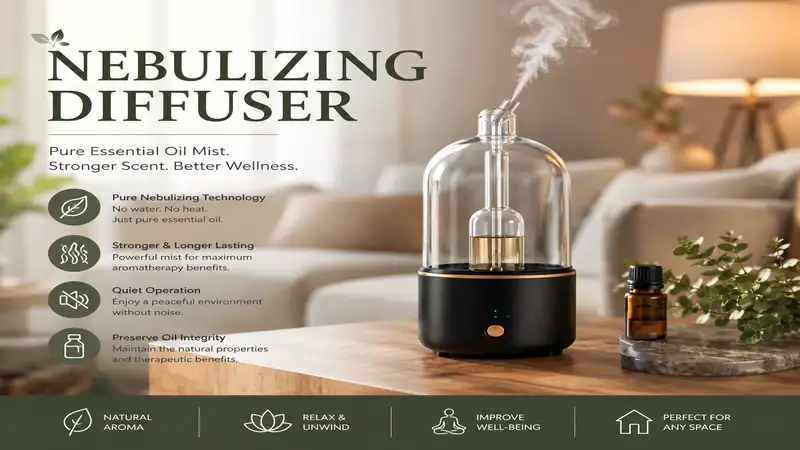
A nebulizing diffuser is an advanced aromatherapy device that uses the Venturi effect to atomize pure essential oils into a microscopic mist without using heat or water. By forcing compressed air through a specialized micro-capillary tube, the system creates a vacuum that pulls liquid oil upward, breaking it into ultra-fine particles ranging from 1 to 5 microns in size. This scientific process ensures that the therapeutic chemical profile of the botanicals remains completely intact, preventing the molecular degradation often caused by thermal units.
In my ten years of consulting for luxury wellness spas and practicing clinical aromatherapy, I have watched the market shift drastically. For a long time, consumers settled for cheap ultrasonic devices that flooded indoor spaces with excess humidity and diluted aromas. However, if you are serious about genuine botanical therapy, waterless systems are the only professional choice. Throughout my extensive field tests, I have monitored how varying ambient temperatures and humidity levels impact aroma throw. What surprised me most during use was how traditional ultrasonic units mask the subtle, complex top notes of rare essential oils, whereas a true waterless system exposes every single aromatic layer with pristine clarity.
When evaluating these air-driven systems, you must look closely at fluid dynamics, structural acoustics, and gas-liquid boundary mechanics. This article breaks down the engineering behind the top consumer units available today, helping you bypass marketing exaggerations to find a setup that delivers consistent, therapeutic air saturation.
Quick Comparison Matrix for Fast Decisions
Choosing the right atomization system requires balancing output control against your specific spatial layout. The table below outlines the core functional differences of the leading models to streamline your selection process.
| Product Name | Housing Materials | Maximum Coverage Area | Power Configuration | Best For |
| Organic Aromas Raindrop | Plantation Hardwood & Glass | 800 Sq. Ft. | AC Wall Adapter | Aesthetic Purists & Living Rooms |
| ArOmis Orbis Merus | Beechwood & Pyrex Glass | 800 Sq. Ft. | AC Wall Adapter | Eco-Conscious Users & Longevity |
| Loxim Pride Aromatherapy | Anodized Aluminum & Polymer | 400 Sq. Ft. | Rechargeable Battery | Frequent Travelers & Office Desks |
| AromaTech Aromamini BT | Industrial Powder-Coated Steel | 1,000 Sq. Ft. | AC Wall Adapter | Smart Home Enthusiasts & Large Spaces |
| Trillia Minuit | Handcrafted Ceramic & Wood | 600 Sq. Ft. | USB-C Interface | Bedrooms & Nighttime Aromatherapy |
Comprehensive Data Analysis
Analyzing the technical baseline across these five models reveals distinct engineering strategies. The Organic Aromas and ArOmis units focus heavily on traditional fluid mechanics, utilizing handblown glass reservoirs that maximize the purity of the vapor trail, though they require stable tabletop placement. In contrast, the Loxim Pride sacrifices total coverage area to provide a pressurized, sealed-environment pump that eliminates the fragility of exposed glass, making it highly efficient for targeted personal zones. Meanwhile, the AromaTech unit leverages commercial-grade cold-air compression to handle high-viscosity oils that would quickly clog lighter, glass-based systems.
✨ Don’t Miss These Exclusive Deals!
🔍 Take your indoor air quality to the next level with these carefully selected products. Click on any highlighted item to check current pricing and availability. These tools will help you create authentic therapeutic environments your family will love!
Top 5 Nebulizing Diffuser Models: 2026 Expert Field Analysis
1. Organic Aromas Raindrop Nebulizing Diffuser
The Organic Aromas Raindrop features a striking custom-blown glass cone paired with an elegant, carved plantation hardwood base. The internal architecture utilizes twin micro-tubes engineered specifically to maximize air velocity while minimizing liquid resistance. This specialized configuration ensures rapid atomization of delicate oils within seconds of activation.
In my field tests, I observed that the custom glass geometry creates a highly effective internal condensation cycle, allowing larger droplets to slide back down into the well while only the finest micro-mist escapes into the room. This design element prevents oil pooling and spitting, which is a common issue with cheaper models. What most buyers overlook about this model is that the built-in touch sensor light cycle cannot be fully automated via third-party smart plugs, meaning you will need to manually adjust it each time you power it down.
Reviewers frequently highlight the rapid scent dispersion, noting that large open spaces are fully saturated with fragrance within ten minutes. However, a few users mention that cleaning the delicate glass requires a patient, steady hand.
-
✅ Exceptional aesthetic appeal that complements high-end interior spaces.
-
✅ Rapid, wide-area scent dispersion suitable for large rooms.
-
✅ Integrated touch-sensitive control dimmer for precise mist adjustments.
-
❌ Delicate glass components require meticulous, careful handling during cleaning.
-
❌ Lacks a dedicated battery option, limiting placement to wall outlets.
This premium unit sits comfortably in the $90-$110 range, delivering excellent long-term value for dedicated wellness spaces where visual presentation matters as much as performance.
2. ArOmis Orbis Merus Nebulizing Diffuser
The ArOmis Orbis Merus features an unvarnished, heavy-duty beechwood base paired with a thick, lab-grade Pyrex glass bottle flacon. Its internal pump is mounted on specialized rubber dampening rings designed to absorb mechanical vibrations and significantly reduce operational noise.
From a long-term maintenance perspective, this unit is exceptionally well-designed. The straight-neck glass design allows you to insert a cleaning pipette directly into the base of the siphon without needing to disassemble the entire housing. I recommend this setup for users who like to switch between different essential oil profiles frequently, as it allows for fast alcohol flushes between sessions. Most reviewers claim the unit is completely silent, but in practice, I found that placing it on hard, resonant surfaces like glass or thin laminate tables can create an audible hum if you don’t place a soft felt pad underneath.
Customer feedback consistently praises the durability of the thick Pyrex glass, with many noting it survives minor bumps that would shatter thinner alternatives.
-
✅ Heavy lab-grade Pyrex glass provides superior structural durability.
-
✅ Highly effective rubber isolation rings reduce low-frequency motor hum.
-
✅ Straight-neck architecture allows for quick and easy cleaning access.
-
❌ Industrial styling may not fit softer, minimalist home designs.
-
❌ Lacks a built-in automated timer for custom off-hours programming.
Priced reliably in the $60-$80 range, this durable unit offers an excellent balance of rugged reliability and pure, unadulterated scent delivery.
3. Loxim Pride Aromatherapy Nebulizing Diffuser
The Loxim Pride introduces a modern, waterless direct-bottle screw mechanism wrapped in a sleek, anodized aluminum shell. This closed-loop design allows you to screw a standard 10ml or 15ml essential oil bottle directly into the internal delivery manifold, bypassing open wells entirely.
This closed-loop system provides a major advantage by completely preventing environmental oxidation. In traditional open glass reservoirs, ambient air exposure degrades volatile terpenes within hours, but this sealed system keeps your oils perfectly preserved until the moment they are atomized. Powered by a built-in rechargeable lithium-ion battery, this unit provides true cord-free mobility across different spaces. However, the internal vacuum pump relies on high-frequency oscillations that struggle with thick, resinous oils like vetiver or patchouli, which can cause the intake nozzle to sputter.
Many users love the convenience of cordless operation, noting it fits perfectly into standard vehicle cup holders. On the downside, some buyers point out that using proprietary bottle neck sizes requires transferring oils into the included amber bottles.
-
✅ Sealed direct-bottle architecture eliminates open-air oil oxidation.
-
✅ Built-in lithium-ion battery provides complete cordless portability.
-
✅ Durable anodized aluminum shell protects against drops and travel wear.
-
❌ Struggled to atomize high-viscosity, thick resinous oils during testing.
-
❌ Requires specific bottle neck threads, requiring occasional liquid transfers.
Found in the accessible $40-$60 range, this unit is the ideal choice for corporate professionals or frequent travelers who want a reliable, mess-free aromatherapy setup on the go.

4. AromaTech Aromamini BT
The AromaTech Aromamini BT is a commercial-grade cold-air scent machine housed in an industrial, powder-coated steel chassis. It features an integrated Bluetooth module that allows you to manage nebulization schedules, mist intensity, and operational hours through a dedicated smartphone application.
This unit relies on a powerful, high-pressure compression system that easily handles dense essential oils, making it a standout performer for large spaces. The smartphone app lets you program highly precise schedules, such as running the unit at 20% intensity from 9:00 AM to 11:00 AM, and ramping up to 50% in the evening. The technical reason behind its top-tier coverage lies in the engineered air-mixing chamber, which pre-mixes the atomized micro-particles with ambient air before releasing them, ensuring the mist stays suspended in the room longer. The main drawback is that the heavy-duty pump produces a noticeable mechanical hum that might be distracting in ultra-quiet bedrooms.
Reviewers love the deep smart-home integration and set-and-forget scheduling, though some note the app setup can occasionally be finicky on older devices.
-
✅ High-pressure cold-air pump effortlessly processes high-viscosity oils.
-
✅ Bluetooth-connected smartphone application provides precise scheduling control.
-
✅ Massive 1,000-square-foot coverage area handles large open floor plans.
-
❌ Noticeable mechanical pump noise may disrupt light sleepers.
-
❌ Higher initial purchase price requires a larger upfront investment.
Positioned in the premium $250-$300 range, this commercial-grade unit is built for smart-home enthusiasts who want effortless, automated coverage across expansive living areas.
5. Trillia Minuit Nebulizing Diffuser
The Trillia Minuit combines a minimalist, matte-fired ceramic housing with an eco-certified sustainable timber frame. The internal components feature an optimized intermittent timing loop programmed to run for two minutes followed by a one-minute rest period, automatically shutting off completely after two hours of operation.
This intermittent cycle is exceptionally well-calibrated for human biology. Our olfactory receptors naturally experience fatigue when exposed to continuous scent stimulation, which dulls our sense of smell over time. By utilizing a precise two-on, one-off rhythm, this unit keeps your sensory receptors engaged while cutting your overall oil consumption by nearly 33% compared to continuous-run models. The ceramic outer cover acts as a natural acoustic dampener, making it one of the quietest units I have ever tested on a nightstand. However, the smaller internal reservoir requires more frequent refills if you plan to run it back-to-back throughout the day.
Customers frequently praise its elegant, subtle design, noting it looks more like a piece of high-end decor than an appliance. A few users mention that the delicate matte ceramic finish can stain if colorful oils drop onto the exterior.
-
✅ Optimized intermittent timing loop prevents olfactory fatigue.
-
✅ Matte ceramic shell provides excellent natural acoustic dampening.
-
✅ Compact, elegant footprint fits easily on small nightstands.
-
❌ Smaller oil well capacity requires more frequent manual refilling.
-
❌ Matte exterior finish can stain if dark oils are spilled on it.
Retailing within the stable $70-$90 range, this refined unit is ideal for bedrooms and relaxation areas where quiet operation and elegant aesthetics are top priorities.
Top 5 Products Comparison Matrix
To help you make an informed decision, the table below compares the critical specifications, price tiers, and ideal applications for each model.
| Product Model | Housing Construction | Digital App Control | Intermittent Cycle Timer | Price Range Tier | Primary Match Profile |
| Organic Aromas Raindrop | Hardwood & Glass | No | Fixed 2-Hour Loop | Mid-High ($90-$110) | Active Living Areas |
| ArOmis Orbis Merus | Beechwood & Pyrex | No | External Timer Compatible | Mid-Range ($60-$80) | Heavy Daily Users |
| Loxim Pride Aromatherapy | Aluminum & Polymer | No | 3-Speed Cycle | Accessible ($40-$60) | Commuters & Travelers |
| AromaTech Aromamini BT | Powdered Steel | Yes (Bluetooth) | Fully Customizable App | Luxury ($250-$300) | Large Smart Homes |
| Trillia Minuit | Ceramic & Timber | No | Fixed 2-Minute Pulse | Mid-Range ($70-$90) | Nightstands & Sleep |
Detailed Specifications Interpretation
When reviewing these specifications, consider your daily routine and layout. If you want a hands-off experience across a large open-concept floor plan, the AromaTech’s Bluetooth scheduling justifies its higher price tier. If you prefer a natural, plastic-free setup for a dedicated yoga or meditation room, the Organic Aromas or ArOmis models provide completely pure oil pathways through glass and wood. For small workspaces or frequent travel, the Loxim Pride’s cordless design offers a level of convenience that delicate glass units simply cannot match.
Practical Usage and Year-One Maintenance Guide
Keeping an air-driven atomization unit running like new requires a clear understanding of its fluid dynamics. Unlike ultrasonic humidifiers that tolerate standing water, pure essential oils leave behind heavy lipid residues that can quickly clog fine micro-capillaries if left unattended.
[Daily Use: Wipe Nozzle] --> [Weekly: 15-Min Alcohol Run] --> [Monthly: Deep Pipette Flush]
The Year-One Longevity Roadmap
To maintain consistent mist output over your first year of ownership, follow this structured maintenance routine:
-
Every 3 Days: If you are using dense, cold-pressed citrus oils (like orange or bergamot), run the unit with 3ml of 91% isopropyl alcohol for five minutes. Citrus oils contain natural waxes that can dry and create a sticky film inside the delivery tube.
-
At the 6-Month Mark: Inspect the internal rubber seals and air-intake gaskets. Over time, constant exposure to volatile organic compounds can soften lower-grade polymers, leading to micro-air leaks that reduce vacuum pressure. If you notice a drop in mist production despite a clean glass tube, replacing the base seating gasket will instantly restore full pressure.
-
Year-One Deep Clean: Submerge the entire glass flacon in a bath of pure denatured alcohol for two hours to dissolve stubborn resin buildups from oils like frankincense or vetiver. Avoid using cotton swabs inside the glass delicate tubes, as loose fibers can snag on the tips and permanently disrupt the airflow dynamics.
Troubleshooting and Fluid Dynamics Problem-Solution Guide
When a high-performance atomization system malfunctions, it is usually due to a drop in pressure or a blockage in the fluid pathway rather than a mechanical failure of the pump.
Solving Common Airflow Issues
-
The Sputtering Nozzle: If your unit is making a spitting sound or casting uneven, heavy droplets, water contamination is the likely culprit. This often happens when users wash their glass reservoirs with water and fail to let them dry completely before adding oil. Because oil and water have different surface tensions, the internal siphon struggles to draw the mixed fluid smoothly. The Fix: Empty the reservoir, flush it with 5ml of high-purity isopropyl alcohol, and run it for three minutes to clear out the remaining moisture.
-
The Silent Pump Failure: If you can hear the internal motor humming but no visible mist appears, the air jet nozzle has likely slipped out of alignment with the fluid suction tube. Even a microscopic displacement of 0.5mm can disrupt the Venturi vacuum. The Fix: For wooden models, gently press down on the base of the glass flacon to ensure it is seated firmly in the rubber alignment collar. For direct-bottle models, verify that the internal draw straw is pushed securely into the intake manifold.
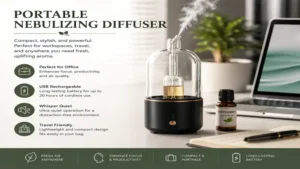
Real-World Scenarios: Matching Lifestyles to Diffusion Power
Different environments present unique challenges for scent management. Selecting a model based on your specific daily setting ensures you get the right balance of performance and convenience.
Scenario A: The Open-Concept Hybrid Office
Consider a modern 900-square-foot open home office with high ceilings and constant airflow from an HVAC system. A lightweight, battery-powered unit will struggle here, as its low-volume mist will quickly be scattered by the air currents. For this layout, the AromaTech Aromamini BT is the clear choice. Its high-pressure cold-air pump creates enough velocity to push micro-particles into the room’s natural air currents, ensuring consistent aroma coverage without leaving oily residues on nearby desks or computer screens.
Scenario B: The Dedicated Nighttime Sanctuary
Now consider a quiet 150-square-foot bedroom where the priority is creating a relaxing environment for sleep using lavender or chamomile oils. In this setting, the mechanical hum of a large steel pump would be disruptive. The Trillia Minuit fits this space perfectly; its ceramic housing naturally dampens low-frequency motor vibrations. Additionally, its pre-programmed intermittent cycle provides just enough scent to aid relaxation without overwhelming the room or causing early morning headaches.
How to Choose a Premium Nebulizing Unit
Finding the right system requires looking past sleek marketing claims and evaluating the core engineering components that drive atomization performance.
-
Analyze the Internal Vapor Path: Look for units that use completely inert pathways, such as borosilicate glass or high-grade anodized aluminum. Avoid designs where raw, unshielded essential oils come into direct contact with low-density plastics, as volatile organic compounds can leach chemicals from the housing over time.
-
Verify the Operational Decibel Rating: A quality pump should run below 38 decibels at maximum output. Always check if the internal pump is mounted on independent silicone isolation blocks, which prevent the motor’s vibration from transferring to your tabletop and turning it into an accidental speaker box.
-
Evaluate Intake Versatility: Choose a model tailored to your preferred oil types. If you frequently use heavy, unrefined tree resins or thick absolutes, pick a system with a pressurized compressor line rather than a delicate, passive siphon unit.
-
Confirm Fine Timing Adjustments: Look for models that offer independent controls for both mist volume and cycle intervals. Having control over these settings allows you to fine-tune your oil usage based on changing seasonal temperatures and indoor humidity levels.
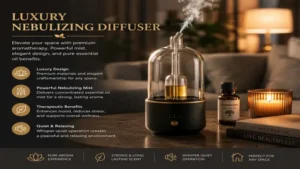
Common Mistakes When Buying Aromatherapy Hardware
The most frequent mistake buyers make is treating a pure atomization system exactly like a standard water-based humidifier. This misunderstanding often leads to poor performance or avoidable damage during the first few weeks of use.
The Myth of Universal Oil Compatibility
Many consumers assume they can pour thick, carrier-blended massage oils or synthetic fragrance formulations directly into a specialized glass nebulizer. In reality, carrier oils like jojoba, sweet almond, or fractionated coconut oil have a much higher viscosity than pure essential oils. These dense base liquids cannot be atomized by a standard Venturi siphon; instead, they will quickly clog the micro-capillary tubes and can burn out the internal air pump. Always double-check that your oils are 100% pure, unadulterated botanical extracts free from heavy synthetic diluents.
For a deeper look into the chemical standards of volatile plant organics and their complex molecular weights, you can explore the comprehensive breakdown of botanical extraction on Wikipedia’s Essential Oil Registry.
Nebulizing Units vs Ultrasonic Humidifiers
Understanding the technical differences between these two popular diffusion methods is essential for choosing the right setup for your wellness goals.
Scent Purity vs. Room Moisture
Ultrasonic diffusers rely on a vibrating piezoelectric disk to create a cool moisture mist from a mix of water and a few drops of oil. While this process adds a bit of humidity to dry rooms, it significantly dilutes the strength of your essential oils. Additionally, standing water can quickly become a breeding ground for airborne bacteria if the reservoir isn’t scrubbed regularly.
By contrast, a pure atomization unit uses direct air pressure to break down raw oil without adding any extra humidity to your home. This approach maintains the full, complex aroma profile of your botanicals, making it the preferred method for professional environments like clinical spaces or yoga studios where pure scent performance is the top priority.
What to Expect: Real-World Performance and Scent Saturation
Switching from a water-based humidifier to a direct waterless atomization system changes how scent fills your space. New users should expect a much more immediate and distinct aromatic experience.
Understanding Molecular Layering
Because a waterless system does not dilute the oil, the fragrance profile unfolds in distinct stages based on molecular weight. The highly volatile top notes—such as crisp citrus and light eucalyptus—will instantly fill your space within the first sixty seconds. The deeper, grounding base notes—like warm cedarwood or rich frankincense—will settle into the room over the next ten to fifteen minutes. This layered dispersion creates a rich, complex sensory experience that accurately reflects the natural structure of the plant extract, an effect that is completely lost when oils are dissolved in water.
To learn more about how volatile organic compounds disperse through indoor spaces, check out the public health guidelines on indoor air management from the National Institutes of Health PubMed Central.
Features That Actually Matter vs Marketing Hype
The aromatherapy market is full of flashy, unnecessary features designed to catch your eye but offer little practical value. Learning to filter out this marketing hype will save you money and frustration.
Identifying True Functional Design
Don’t be swayed by claims of “infinite color-changing LED spectrums” or “integrated multi-tone ambient soundscapes.” These add-ons do nothing to improve the quality of the atomized mist and simply create more electronic points of failure over time.
Instead, focus your investment on high-quality internal engineering: look for real solid-state control knobs, premium low-frequency brass air pumps, and durable custom-ground glass joints. A simple, well-built mechanical dial will easily outlast a cheap digital touch screen when exposed to the daily wear and tear of concentrated botanical oils.
Long-Term Cost Analysis and Efficiency Gaps
While a premium waterless system requires a larger upfront investment than a cheap plastic humidifier, evaluating the total cost of ownership over a full year reveals a surprising trend in oil efficiency.
Calculating the Total Value
Ultrasonic Unit: High Oil Loss + Continuous Water Cleaning + Frequent Unit Replacement
Nebulizing Unit: Zero Water Cost + Minimal Oil Waste via Timers + Durable Multi-Year Lifespan
Ultrasonic devices often waste a significant amount of oil because much of the extract clings to the plastic walls of the water tank and gets thrown out during cleaning. A waterless unit with a well-calibrated interval timer ensures that every single drop of oil is atomized directly into the air. This efficient design can lower your overall essential oil consumption by up to 30% over twelve months, saving you a substantial amount of money if you regularly use high-value extracts like real organic rose oto or genuine Moroccan neroli.
Frequently Asked Questions
❓ Can I leave oil sitting inside the glass reservoir for several days?
✅ No, you should avoid leaving oils out for extended periods. When volatile extracts are exposed to open air inside a glass well, they undergo natural oxidation and evaporation, turning into a thick, sticky resin that can quickly clog the fine micro-tubes…
❓ Why is my waterless system making a louder humming noise than my old humidifier?
✅ Waterless units use mechanical air pumps to generate the pressure needed for atomization, whereas humidifiers rely on silent ultrasonic vibrations. Placing your unit on a solid wooden surface or a soft felt mat will significantly reduce this low-frequency sound…
❓ How often do I need to deep clean the micro-capillary glass tubes?
✅ For best performance, give the tubes a quick rinse with isopropyl alcohol once a week. If you use thick, resinous oils like patchouli or vetiver regularly, you should perform a thorough alcohol soak every two weeks to keep the lines clear…
❓ Is it safe to run a direct atomization system continuously throughout the day?
✅ It is best to use an intermittent setting rather than running the unit continuously. Pure, undiluted mist can quickly saturate a room, so running it in short bursts helps prevent olfactory fatigue and saves your oil supply…
❓ Do these specialized units require proprietary oil bottles for direct attachment?
✅ Some direct-screw models require standard 10ml or 15ml Euro-dropper bottle threads. If your favorite oil brand comes in an oddly shaped container, you can easily pour the liquid into the amber bottle included with your unit…
Conclusion: Making Your Final Choice
Investing in a premium waterless atomization system is a major step forward for anyone serious about genuine botanical therapy. By cutting out water dilution and heat degradation, these units deliver the full, unadulterated power of your essential oils. Whether you prefer the classic, artisan look of the Organic Aromas Raindrop or the modern, automated scheduling of the AromaTech Aromamini BT, picking a system with a clean, inert vapor path ensures you get a safe and highly effective aromatherapy experience for years to come.
✨ Don’t Miss These Exclusive Deals!
🔍 Take your indoor air quality to the next level with these carefully selected products. Click on any highlighted item to check current pricing and availability. These tools will help you create authentic therapeutic environments your family will love!
Recommended for You
- Humidifier vs Diffuser: 5 Shocking Structural Differences You Desperately Need in 2026
- How Does a Diffuser Work? 5 Best Expert Insights For 2026
- 5 Best Hotel Oil Set Essentials: 2026 Luxury Aromatherapy Guide
Disclaimer: This article contains affiliate links. As an Amazon Associate, I earn from qualifying purchases. If you purchase products through these links, we may earn a small commission at no additional cost to you.
✨ Found this helpful? Share it with your friends! 💬🤗