
In This Article
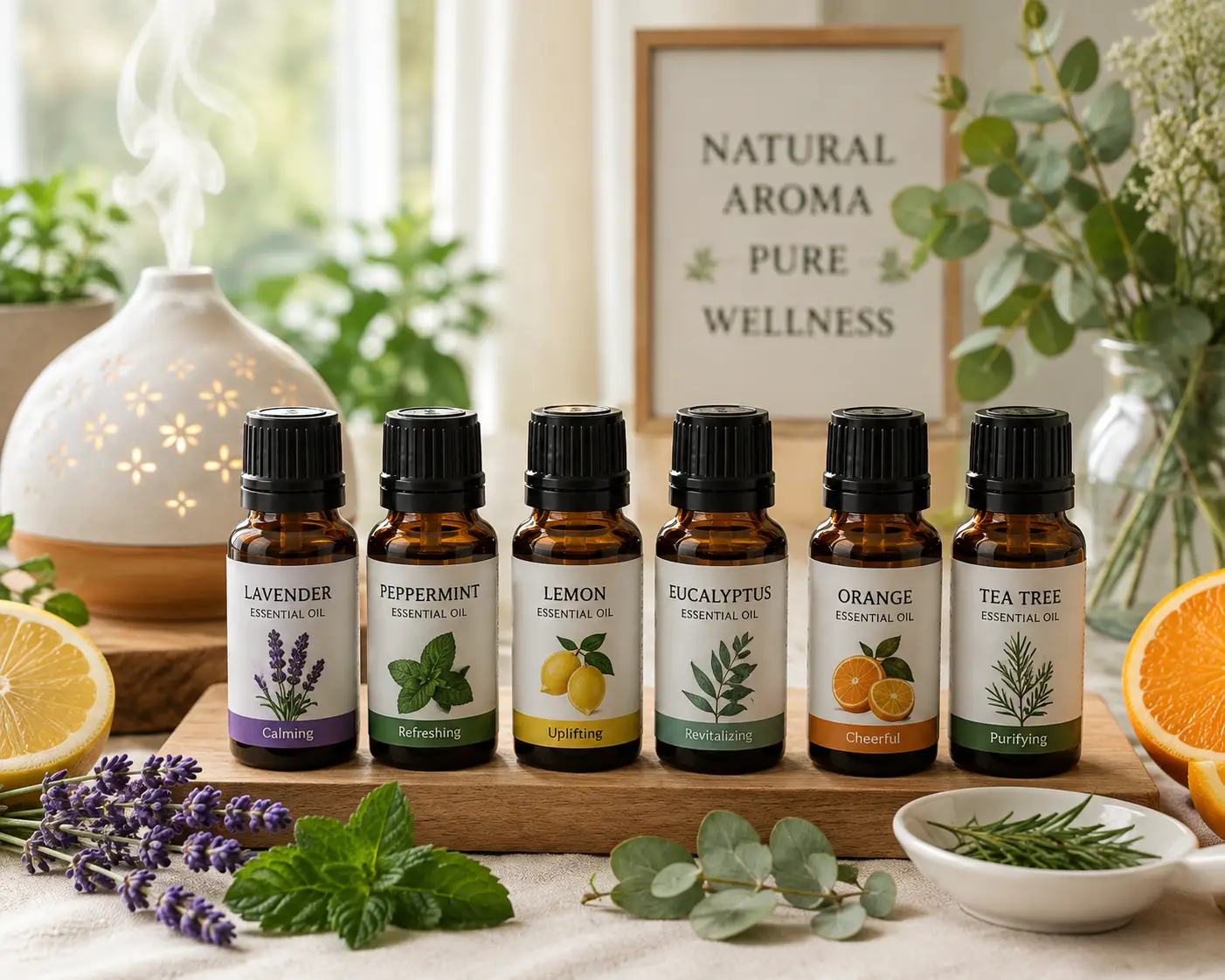
Walk into any home goods store and you’ll find a wall of candles promising “spa day” or “fresh linen,” but they rarely deliver the same clean, layered scent as the real thing. That’s where nice smelling essential oils come in — concentrated plant extracts that fill a room with an aroma that’s genuinely pleasant, not just chemically approximated. What are nice smelling essential oils? They’re pure, undiluted oils steam-distilled or cold-pressed from flowers, leaves, peels, or resin, chosen specifically for scent profiles people enjoy diffusing at home, from bright citrus to soft floral to warm woodsy notes.
The tricky part is that not every bottle labeled “essential oil” actually smells good, or is even pure. Cheap fillers, weak extraction, and vague sourcing can turn a promising blend into something flat or medicinal. According to the National Center for Complementary and Integrative Health, aromatherapy research is still developing, but the practice of inhaling pleasant plant aromas for mood and relaxation has a long, well-documented history — which is exactly why picking a genuinely well-made oil matters.
In this guide, we’ve researched seven real, currently available products spanning budget-friendly variety sets to premium, design-forward brands. You’ll get honest analysis of what each one smells like, who it’s actually built for, and where your money is best spent — no fabricated reviews, no inflated claims, just a straightforward comparison to help you choose nice smelling essential oils that fit your space and your budget.
Nice Smelling Essential Oils at a Glance
Before diving into full reviews, here’s a fast snapshot of how these seven picks stack up on price tier, scent style, and who they suit best.
| Product | Scent Style | Price Range | Best For |
|---|---|---|---|
| ArtNaturals Top 16 Set | Broad variety, floral-to-woody | Under $30 | First-time buyers wanting options |
| Majestic Pure Aura Set | Bright citrus-herbal | Under $20 | Budget shoppers, small spaces |
| NOW Foods 10-Oil Sampler | Classic, no-frills singles | Around $25 | Reliability over aesthetics |
| Plant Therapy Top 14 Set | Balanced, well-rounded | Between $40 and $60 | Serious aromatherapy hobbyists |
| Edens Garden Best of the Best 6 Set | Complex proprietary blends | Between $35 and $50 | Anyone who wants blends, not just singles |
| Rocky Mountain Oils Essentials Kit | Clean, potent, true-to-source | Between $50 and $70 | Purity-focused, long-term users |
| Vitruvi Essentials Kit | Refined, spa-like, minimalist | Between $60 and $90 | Design-conscious gifting and decor |
Looking at the table, the pattern is clear: price climbs alongside sourcing transparency and scent refinement, not just bottle count. The ArtNaturals Top 16 Set and Majestic Pure Aura Set win on sheer value and variety, while the Rocky Mountain Oils Essentials Kit and Vitruvi Essentials Kit justify their higher price with tighter quality control and more polished presentation. If you’re brand new to essential oils, starting at the top of the table costs less to experiment with; if you already know your favorite notes, it’s worth paying up for the bottom two.
Comparing these side by side already saving you money? A quick save or share helps a friend skip the trial-and-error too! 💬
Top 7 Nice Smelling Essential Oils, Reviewed for 2026
We looked at real spec sheets, ingredient sourcing, and aggregated customer sentiment to put together this lineup of the best smelling essential oils across every budget. Each entry below explains not just what’s in the bottle, but what that actually means once you’re diffusing it in your living room.
1. ArtNaturals Aromatherapy Top 16 Essential Oil Set — biggest variety for the price
The ArtNaturals Aromatherapy Top 16 Essential Oil Set packs sixteen 10 mL bottles into one box, covering everything from lavender and eucalyptus to bergamot and frankincense. That breadth is the whole appeal: instead of committing to one or two scents, you get an entire sampler to figure out what you actually like. Each oil is sold as 100% pure and undiluted, meant for diffusers, DIY blending, or light topical use with a carrier oil. In practice, that means beginners can experiment with citrus-floral combinations one week and grounding, woodsy blends the next, without buying sixteen separate bottles at full price.
Reviews consistently report that the set is a strong entry point for people who’ve never diffused oils before, with many buyers specifically praising the value of getting this many scents in one purchase. A common theme in customer feedback is that a handful of the individual oils — most often the florals — smell noticeably lighter than single-origin brands, which tracks with the lower price point. For casual home use, that’s a fair trade-off; for serious topical or therapeutic use, it’s worth knowing upfront.
Pros:
- ✅ Sixteen scents means fewer wasted purchases while you experiment
- ✅ Budget-friendly entry point into aromatherapy
- ✅ Compact bottles are easy to store and travel with
Cons:
- ❌ Some floral notes read as thinner than premium single-oil brands
- ❌ Limited documentation on individual batch testing
Priced under $30 for sixteen bottles, the ArtNaturals Aromatherapy Top 16 Essential Oil Set is hard to beat on cost-per-scent, making it a smart pick if you’re still discovering which notes you actually enjoy.
2. Majestic Pure Aura of Positivity Essential Oils Set — best value for small spaces
The Majestic Pure Aura of Positivity Essential Oils Set bundles six 10 mL bottles — peppermint, lavender, eucalyptus, tea tree, and lemongrass among them — around a bright, mood-lifting theme rather than a random assortment. That curated angle means the scents are chosen to work together in a diffuser, so you’re less likely to end up with a clashing combination straight out of the box. The peppermint and lemongrass in particular lean sharp and energizing, which suits smaller apartments or single rooms where a little goes a long way.
What most buyers overlook with a set like this is that a tighter, purpose-built lineup often performs better in everyday use than a giant 16- or 20-oil kit, simply because you’ll actually reach for all six instead of half of them sitting unused. Reviews frequently mention that the tea tree and eucalyptus have a clean, noticeable throw even in modest diffusers, while the lavender is described as pleasant but slightly milder than dedicated single-note bottles from pricier brands.
Pros:
- ✅ Curated scent lineup avoids mismatched combinations
- ✅ Strong scent throw from tea tree and eucalyptus
- ✅ One of the most affordable sets in this roundup
Cons:
- ❌ Lavender note is milder than premium single-origin options
- ❌ Smaller bottle count limits long-term blending variety
At under $20, the Majestic Pure Aura of Positivity Essential Oils Set is arguably the best budget pick here if you want a cohesive, ready-to-use scent lineup rather than a sprawling sampler.
3. NOW Foods Essential Oils 10-Oil Variety Pack Sampler — most trusted no-frills brand
NOW Foods has built decades of credibility as a supplement and wellness manufacturer, and its NOW Foods Essential Oils 10-Oil Variety Pack Sampler carries that same reputation into aromatherapy. The sampler bundles ten single-note oils — think lavender, peppermint, sweet orange, and eucalyptus — in straightforward, unglamorous bottles that prioritize function over branding. What that translates to practically is a set you can trust to be consistently sourced batch after batch, since NOW manufactures at a scale that supports rigorous internal quality control.
Based on comparing the specs against boutique competitors, NOW’s oils don’t chase trendy proprietary blends; they focus on doing classic single notes reliably. Reviews consistently describe the scent quality as “solidly good, not flashy” — the peppermint and orange oils in particular get praised for being true-to-source, while a few buyers note the packaging feels more clinical than the artisanal glass bottles you’ll see from premium brands later in this list.
Pros:
- ✅ Backed by a well-established, quality-focused manufacturer
- ✅ Ten reliable single-note scents in one purchase
- ✅ Competitive pricing relative to reputation and consistency
Cons:
- ❌ Packaging feels more clinical than boutique brands
- ❌ No proprietary blends, only single notes
Around $25 for ten oils, the NOW Foods Essential Oils 10-Oil Variety Pack Sampler is the pick for shoppers who value consistency and brand trust over aesthetics or novelty blends.
4. Plant Therapy Top 14 Essential Oil Set — best for serious hobbyists
The Plant Therapy Top 14 Essential Oil Set includes fourteen 10 mL bottles covering the most commonly used oils — lavender, tea tree, peppermint, lemon, and eucalyptus among them — from a brand that has built its identity around batch-specific purity testing. Plant Therapy publishes GC/MS (gas chromatography-mass spectrometry) reports for its oils, which means you can actually verify what’s in the bottle rather than taking a label’s word for it. In practice, that transparency matters most once you move beyond casual diffusing into topical blending or more deliberate aromatherapy routines.
What the spec sheet doesn’t say, but aggregated reviews reveal, is that Plant Therapy’s lavender and eucalyptus in particular are frequently singled out as smelling noticeably more “true to plant” than mass-market alternatives — less perfumed, more like the actual herb. The brand’s separate KidSafe line (sold independently) also signals a level of safety-conscious formulation that resonates with buyers who have children or pets at home, even though this particular 14-oil set is the standard adult line.
Pros:
- ✅ Published batch purity testing builds real trust
- ✅ Lavender and eucalyptus praised as unusually true-to-plant
- ✅ Fourteen oils cover nearly every common use case
Cons:
- ❌ Priced higher than mass-market variety sets
- ❌ Some bottles are small relative to the price per set
Typically priced between $40 and $60, the Plant Therapy Top 14 Essential Oil Set earns its premium through documented quality control that casual buyers can independently verify.
5. Edens Garden Best of the Best 6 Set — most complex, layered scents
Where most sets on this list lean on single-note oils, the Edens Garden Best of the Best 6 Set stands out for including proprietary blends alongside classics — specifically their well-known “Joy” and “Good Night” formulations, plus lavender, lemon, peppermint, and a protective blend. That distinction matters because a well-designed blend often smells more finished and pleasant straight out of the bottle than a single oil does, since someone has already balanced the top, middle, and base notes for you.
Here’s what to weigh: reviews commonly describe “Joy” as a bright, citrus-forward pick-me-up and “Good Night” as a soft, slightly sweet, chamomile-adjacent blend that’s become something of a signature scent for the brand among repeat customers. Based on comparing this to single-note competitors, Edens Garden is the clearest choice on this list if your goal is genuinely nice smelling essential oils for ambiance rather than oils selected purely for topical or functional use.
Pros:
- ✅ Proprietary blends smell more finished than single notes
- ✅ “Good Night” blend has a loyal, repeat-purchase following
- ✅ Strong balance between blends and useful single oils
Cons:
- ❌ Fewer single-note options than dedicated sampler sets
- ❌ Some blends are more scent-focused than therapeutic-focused
Sitting between $35 and $50, the Edens Garden Best of the Best 6 Set is the pick to reach for when the goal is simply making your home smell better, not building a full aromatherapy toolkit.
6. Rocky Mountain Oils Essentials Kit — most potent and transparent sourcing
The Rocky Mountain Oils Essentials Kit includes six oils — lavender, lemon, orange, peppermint, tea tree, and rosemary — from a brand built around direct-trade sourcing relationships and third-party purity testing. What most buyers overlook with “potency” claims in general is that it usually comes down to how the plant was grown, harvested, and distilled, not just marketing language; Rocky Mountain Oils leans heavily into publishing that sourcing information, which is a meaningfully different value proposition than a generic supplier relabeling wholesale oil.
Reviews consistently report that the peppermint and rosemary oils in this kit have a notably stronger, sharper scent than budget alternatives — a difference reviewers attribute to fresher, higher-concentration distillation. The trade-off is price: this kit costs noticeably more per milliliter than the sets earlier on this list, which is a fair complaint from buyers who only diffuse oils occasionally and don’t need that extra potency.
Pros:
- ✅ Noticeably stronger, fresher scent in peppermint and rosemary
- ✅ Transparent, direct-trade sourcing practices
- ✅ Smaller kit size makes it easy to try before committing further
Cons:
- ❌ Higher cost per milliliter than mass-market sets
- ❌ Overkill for buyers who only diffuse occasionally
In the $50 to $70 range, the Rocky Mountain Oils Essentials Kit makes the most sense for people who already know they’ll use essential oils regularly and want the quality bump to match.
7. Vitruvi Essentials Kit — most refined for gifting and decor
The Vitruvi Essentials Kit bundles lavender, eucalyptus, grapefruit, and spruce in the brand’s signature minimalist glass bottles — the same aesthetic that’s landed Vitruvi shelf space at retailers like Sephora and Nordstrom. That design-forward positioning isn’t just packaging fluff; it reflects a brand built around the idea that essential oils should look as good on a shelf as they smell in a diffuser, which makes this kit a genuinely strong gifting option compared to clinical-looking sampler boxes.
On paper, this means you’re paying a premium partly for curation and presentation, but reviews suggest the scent quality backs it up — the grapefruit and spruce combination in particular gets described as “spa-like” and less one-note than budget citrus oils. What the spec sheet doesn’t say, but customer feedback reveals, is that buyers who already own budget sets still often keep a Vitruvi bottle around specifically because the scent profile feels more sophisticated for entertaining or gifting occasions.
Pros:
- ✅ Spa-like, sophisticated scent profile across all four oils
- ✅ Elegant glass packaging doubles as home decor
- ✅ Genuinely strong option for gifting
Cons:
- ❌ Highest price per milliliter in this entire roundup
- ❌ Only four scents included, limiting variety
Priced between $60 and $90, the Vitruvi Essentials Kit is best reserved for buyers who want fewer, more polished scents rather than a wide sampler.
Complete Feature and Price Comparison
To make side-by-side shopping easier, here’s how all seven products compare on bottle count, price tier, and standout strength.
| Product | Bottle Count | Price Range | Standout Strength | Best For |
|---|---|---|---|---|
| ArtNaturals Top 16 Set | 16 | Under $30 | Variety | Beginners exploring scents |
| Majestic Pure Aura Set | 6 | Under $20 | Cohesive curation | Small spaces, tight budgets |
| NOW Foods 10-Oil Sampler | 10 | Around $25 | Brand reliability | Trust-focused buyers |
| Plant Therapy Top 14 Set | 14 | $40–$60 | Verified purity | Aromatherapy hobbyists |
| Edens Garden 6 Set | 6 | $35–$50 | Proprietary blends | Home ambiance seekers |
| Rocky Mountain Oils Kit | 6 | $50–$70 | Sourcing transparency | Frequent, dedicated users |
| Vitruvi Essentials Kit | 4 | $60–$90 | Design and refinement | Gifting and decor |
Reading across this table, notice that bottle count and price aren’t strongly correlated — the Vitruvi Essentials Kit has the fewest bottles but the highest price, because you’re paying for curation and presentation rather than raw volume. If your priority is stretching a budget across the widest range of scents, the ArtNaturals Top 16 Set wins on pure math; if you want fewer decisions and a more finished result, Edens Garden or Vitruvi deliver that at a higher per-bottle cost.
How to Choose Nice Smelling Essential Oils
Picking nice smelling essential oils comes down to matching sourcing quality, scent profile, and intended use to your actual routine. Here’s the process worth following:
- Decide how you’ll use them first. Diffusing for ambiance has different priorities than topical use with a carrier oil, so figure out your primary use case before comparing bottles.
- Check for purity documentation. Brands like Plant Therapy and Rocky Mountain Oils publish GC/MS testing, and the National Association for Holistic Aromatherapy outlines what responsible sourcing and labeling should look like — both are meaningful signals of quality control.
- Start with a set, not a single bottle. Scent preference is personal, and a variety or blend set lets you find your favorites without repeat purchases.
- Read aggregated reviews for scent longevity. Some oils fade fast in a diffuser; reviews often flag this before you waste money finding out yourself.
- Match bottle size to how often you’ll actually diffuse. Occasional users don’t need large format bottles that may oxidize before they’re used up.
- Consider blends if you want a “finished” scent. A well-designed proprietary blend often smells more complete than a single note straight out of the bottle.
- Budget for the whole experience, not just the oil. A quality diffuser matters as much as the oil itself for how a scent actually fills a room.
Nice Smelling Essential Oils vs. Synthetic Fragrance Oils
A lot of home fragrance shoppers default to candles or plug-ins without realizing there’s a meaningful difference between essential oils and synthetic fragrance oils, and it’s not just marketing.
| Factor | Nice Smelling Essential Oils | Synthetic Fragrance Oils |
|---|---|---|
| Source | Distilled or pressed from real plant material | Lab-formulated chemical compounds |
| Scent complexity | Naturally layered, evolves over time | Often flat, single-note throughout |
| Ingredient transparency | Frequently batch-tested and disclosed | Rarely disclosed in detail |
| Typical use | Diffusers, topical blends, DIY | Candles, plug-ins, air fresheners |
| Cost per use | Higher upfront, concentrated | Lower upfront, less concentrated |
The core difference comes down to complexity and transparency: essential oils are extracted directly from plants, so their scent naturally shifts as top notes fade and base notes linger, which is part of why brands like Edens Garden and Vitruvi feel more “finished” than a candle. Synthetic fragrance oils are cheaper and often stronger initially, but they tend to smell one-dimensional and fade in a flatter, less pleasant way. If you’re specifically chasing nice smelling essential oils rather than just “any nice smell,” that natural complexity is the entire point of paying more.
Common Mistakes to Avoid When Buying Essential Oils
Even experienced shoppers make avoidable errors here, and most of them come down to rushing the purchase.
Buying based on price alone is the most common misstep — a suspiciously cheap “pure” oil is often diluted with a carrier oil or synthetic fragrance without clear labeling, which is why documentation from brands like Plant Therapy and Rocky Mountain Oils carries real weight. Another frequent error is assuming all lavender, or all peppermint, smells the same across brands; sourcing region and distillation method create real differences, which is exactly why the NOW Foods Essential Oils 10-Oil Variety Pack Sampler and premium options can smell noticeably different despite sharing a label.
Buyers also commonly overbuy variety before knowing their preferences, ending up with large sets like the ArtNaturals Aromatherapy Top 16 Essential Oil Set where half the bottles go unused. Finally, ignoring bottle size relative to usage frequency leads to oxidized, weaker-smelling oil sitting unused for a year — smaller, curated sets like the Majestic Pure Aura of Positivity Essential Oils Set sidestep that problem for casual users.
What to Expect: Everyday Performance and Scent Longevity
Translating spec sheets into lived experience: a 100 mL diffuser typically runs 6-8 hours on a handful of drops, and how long the scent actually lasts in the room depends heavily on the oil’s chemical makeup, not just the diffuser’s runtime. Citrus oils like the grapefruit in the Vitruvi Essentials Kit tend to be “top notes” — bright and immediate, but they fade fastest, often within an hour of the diffuser shutting off. Woodsy and resinous oils, like spruce or frankincense found in sets such as the ArtNaturals Aromatherapy Top 16 Essential Oil Set, act as “base notes” that linger far longer, sometimes detectable the next day in a closed room.
This is why long-lasting essential oil scents usually come from blends rather than single citrus notes — a proprietary formulation like Edens Garden’s “Good Night” blend combines faster and slower-evaporating oils specifically so the scent doesn’t disappear the moment diffusion stops. If all-day fragrance is your goal, prioritize blends with a stated woodsy or floral base over pure citrus singles, and expect to refresh citrus-only diffusers more frequently throughout the day.
Features That Actually Matter (and Ones That Don’t)
Marketing language around essential oils gets noisy fast, so it’s worth cutting through what genuinely affects scent quality versus what’s just packaging.
What actually matters: extraction method (steam distillation versus cold pressing affects scent character), country/region of origin (climate changes a plant’s oil chemistry), batch testing transparency, and bottle material (dark glass protects against light degradation, which is why nearly every brand in this list uses amber or cobalt bottles). What doesn’t matter nearly as much: elaborate box packaging, the number of oils in oversized “mega sets” you’ll never fully use, and vague terms like “therapeutic grade,” which has no standardized legal definition in the United States despite how often it’s used in marketing.
Reviews consistently report that buyers who focus on the best smelling essential oils rather than the flashiest packaging end up happier long-term — the Plant Therapy Top 14 Essential Oil Set and Rocky Mountain Oils Essentials Kit both lean into substance over presentation, and their repeat-purchase rates in aggregated reviews reflect that.
Safety, Regulations, and Standards
Essential oils are regulated in the United States primarily as cosmetics, not drugs, when marketed for fragrance and aromatherapy purposes. According to the FDA, products intended only to make a room or the body smell nice generally fall under cosmetic regulations, meaning claims about treating or curing medical conditions are not permitted on the label — a distinction worth noting if you see aggressive medical claims on a product page. General safety guidelines from aromatherapy associations also cover dilution ratios, skin sensitivity, and appropriate use around children, which is worth a quick read before topical use.
Pet owners in particular should be cautious: the ASPCA notes that certain essential oils, especially concentrated or undiluted ones, can be harmful to cats and dogs if ingested, applied directly, or diffused in poorly ventilated spaces. Practical safety habits include diffusing in well-ventilated rooms, keeping bottles out of reach of children and pets, never applying undiluted oil directly to skin, and patch-testing new oils before broader topical use. None of the products in this roundup are marketed as medical treatments, and none should be treated as one.
Long-Term Cost and Maintenance
The upfront price tag only tells part of the story; total cost of ownership depends on how often you diffuse and how far each bottle actually stretches.
| Product | Approx. Cost | Typical Uses per Bottle | Long-Term Value |
|---|---|---|---|
| ArtNaturals Top 16 Set | Under $30 | High (small bottles, many scents) | Strong for casual, varied use |
| Plant Therapy Top 14 Set | $40–$60 | Moderate-high | Strong for regular hobbyist use |
| Rocky Mountain Oils Kit | $50–$70 | Moderate (concentrated) | Best for frequent, dedicated use |
| Vitruvi Essentials Kit | $60–$90 | Lower (fewer bottles) | Best amortized over gifting/decor use |
Looking at long-term value, the ArtNaturals Aromatherapy Top 16 Essential Oil Set actually offers the lowest cost-per-use for occasional diffusing simply due to bottle count, while the Rocky Mountain Oils Essentials Kit rewards frequent users whose higher usage rate justifies the higher per-bottle cost. Maintenance is minimal across the board — store bottles away from direct sunlight and heat, keep caps tightly sealed between uses, and clean your diffuser regularly, since residue buildup dulls scent output over time far more than the oil itself degrading.
✨ Don’t miss finding your perfect match! 🌿 Compare the full lineup above and click through to check current pricing before these picks sell out of your favorite scent.
Getting Started: Your First 30 Days With Essential Oils
The first month is where most people either fall in love with essential oils or give up on them entirely, usually because of a handful of avoidable early mistakes. In week one, start with just two or three oils from a set like the NOW Foods Essential Oils 10-Oil Variety Pack Sampler rather than trying every scent at once — this helps you actually identify what you like instead of overwhelming your sense of smell. Run your diffuser for shorter sessions (30-60 minutes) initially rather than all day, both to conserve oil and to gauge how strong a scent feels in your specific room size.
By week two, start experimenting with simple two-oil combinations — lavender and orange, or eucalyptus and peppermint, are classic beginner-friendly pairings that rarely clash. Weeks three and four are the time to branch into a proprietary blend, like something from the Edens Garden Best of the Best 6 Set, to see how a professionally balanced scent compares to your own DIY combinations. Common early mistakes include overfilling the diffuser reservoir, using too many drops (5-8 is typically plenty for most diffusers), and forgetting to clean the diffuser weekly, which causes residue buildup and muddies future scents.
Real-World Scenarios: Matching Scents to Your Lifestyle
Different households genuinely benefit from different picks, and matching your situation to the right product avoids wasted money.
Consider a busy parent working from a home office who wants focus-friendly scents without overwhelming a shared living space — the Majestic Pure Aura of Positivity Essential Oils Set‘s peppermint and eucalyptus fit that brief well, offering an energizing but not overpowering presence for short diffusing sessions between calls. A wellness-focused hobbyist who already owns a diffuser and wants to go deeper would get more long-term value from the Plant Therapy Top 14 Essential Oil Set, given the batch documentation and wider range for experimenting with topical blends alongside diffusing.
For someone shopping for a housewarming or holiday gift, the Vitruvi Essentials Kit solves a real problem: it looks polished unwrapped, requires no explanation of “which oils to buy,” and its spa-like scent profile appeals broadly even to recipients who’ve never used essential oils before. And for a budget-conscious renter furnishing a first apartment, the ArtNaturals Aromatherapy Top 16 Essential Oil Set offers enough variety to make an entire home smell intentional without a big financial commitment.
Essential Oils for Home Fragrance: Room-by-Room Picks
Choosing essential oils for home fragrance works best when you match scent character to how each room actually gets used, rather than diffusing the same blend everywhere.
In living rooms and entryways, brighter citrus and light floral notes — like the grapefruit in the Vitruvi Essentials Kit — create a welcoming first impression without lingering too heavily. Bedrooms benefit from calming, slightly sweet blends; the “Good Night” formulation in the Edens Garden Best of the Best 6 Set was practically designed for this exact use case. Home offices do well with sharper, energizing notes like peppermint or rosemary — the rosemary in the Rocky Mountain Oils Essentials Kit stands out here for its noticeably stronger scent throw during long work sessions. Bathrooms and kitchens, where odors need active neutralizing rather than just ambiance, pair well with eucalyptus and tea tree, both of which appear across the Plant Therapy Top 14 Essential Oil Set and the NOW Foods Essential Oils 10-Oil Variety Pack Sampler.
The common thread across all of these room-specific picks is that nice smelling essential oils work best when you’re intentional about which scent goes where, rather than running one diffuser blend through your entire home on repeat.
Frequently Asked Questions
❓ What are the best nice smelling essential oils for beginners?
❓ How long do nice smelling essential oils last once opened?
❓ Are nice smelling essential oils safe to use around pets?
❓ What's the difference between essential oils and fragrance oils?
❓ How much should I expect to pay for good quality essential oils?
Conclusion
Finding genuinely nice smelling essential oils comes down to matching your budget, intended use, and scent preferences rather than chasing the biggest set or the flashiest label. If you’re just starting out, the ArtNaturals Aromatherapy Top 16 Essential Oil Set or Majestic Pure Aura of Positivity Essential Oils Set offer low-risk ways to figure out what you like. Once you know your favorites, stepping up to documented purity from the Plant Therapy Top 14 Essential Oil Set or Rocky Mountain Oils Essentials Kit pays off in scent quality you can actually verify. And if presentation and gifting matter as much as the scent itself, Edens Garden and Vitruvi both deliver a more finished, complex aroma worth the higher price tag.
Whatever you choose, remember that pricing on Amazon changes constantly, so check the current price and availability at the time you’re ready to buy rather than relying on any figures here. None of these picks require a large investment to start noticing a real difference in how your home smells and feels day to day.
Recommended for You
- Best Air Freshener for Home with Pets: 7 Top Picks for 2026
- Essential Oil Combinations for Diffuser: 17 Proven Blends (2026)
- Best Aromatherapy Products of 2026: 7 Proven Picks
Disclaimer: This post contains affiliate links. As an Amazon Associate, I earn from qualifying purchases made through these links, at no additional cost to you.
✨ Found this article helpful? Share it with someone who needs it! 💬🤗