
In This Article
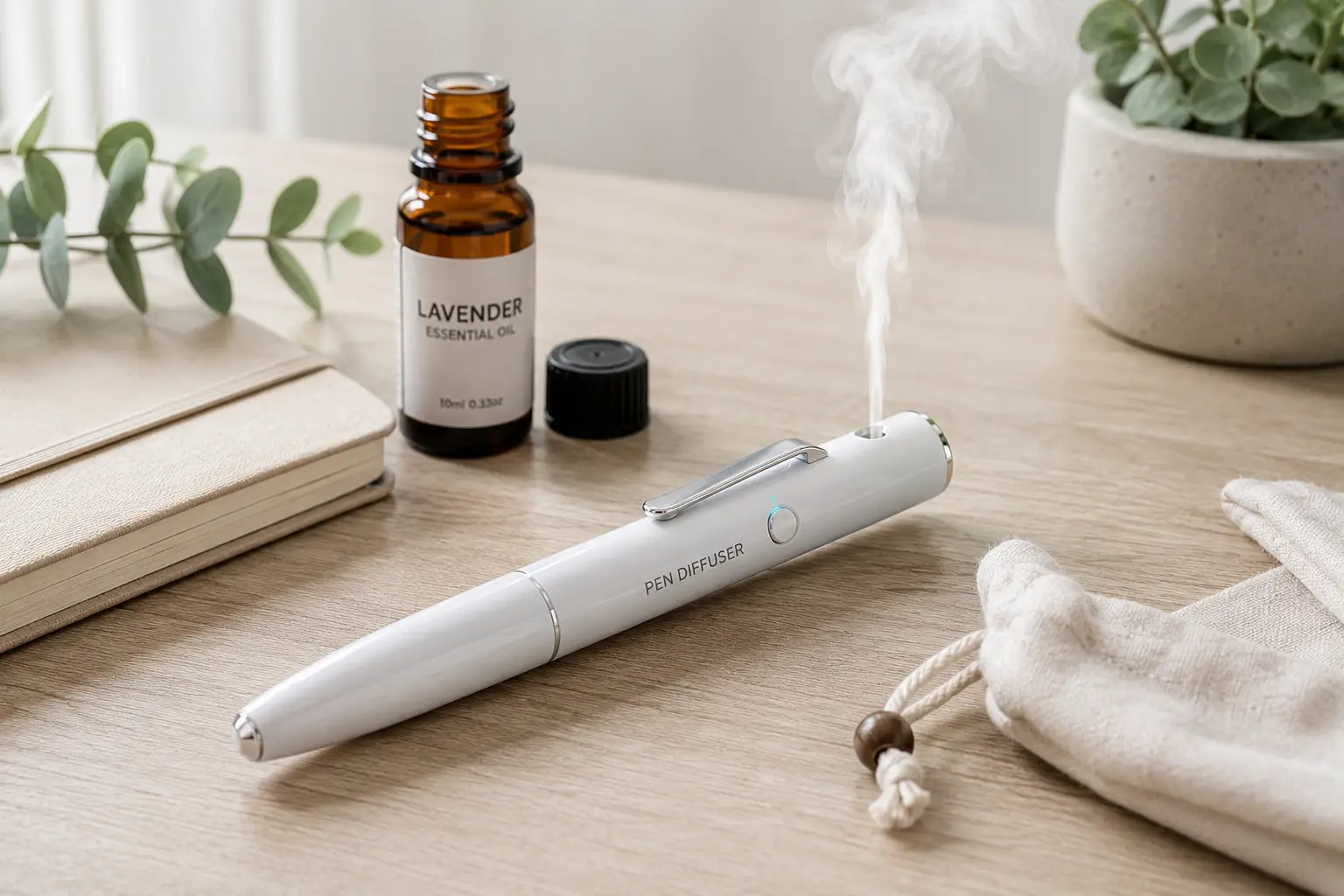
If you’ve been scrolling through wellness corners of the internet lately, you’ve probably noticed a tiny, pocket-sized gadget popping up everywhere: the pen diffuser. It looks like a regular pen, a lip balm tube, or a slim inhaler stick, but it packs a genuine dose of aromatherapy into something you can toss in a bag, a desk drawer, or a coat pocket. A pen diffuser is a portable, non-electric device that releases essential oil or botanical scent through inhalation or contact, without water, batteries, or a wall outlet. Unlike the plug-in humidifier-style diffusers that scent an entire room, a pen diffuser is built for one person, one moment, and one deep breath. That distinction matters more than it sounds like it should, because the “best” diffuser for your living room is rarely the best one for your commute, your desk, or your gym bag.
We spent time digging into real product listings, verified specs, and aggregated customer feedback across seven genuinely different pen diffuser styles — from scented ballpoint pens to breath-activated aromatherapy sticks — so you’re not stuck comparing marketing copy against marketing copy. According to the National Institutes of Health’s overview of aromatherapy, essential oils are most often used by inhaling them or applying a diluted form to the skin, which is exactly the mechanism nearly every pen diffuser on this list relies on. Below, you’ll find honest breakdowns of seven real options, a full buying framework, and answers to the questions people actually type into Google before they add one of these to their cart.
Types of Pen Diffusers at a Glance
Before comparing individual products, it helps to understand that “pen diffuser” is really an umbrella term covering a few distinct product families. Some are writing instruments with a scent feature built in. Others are herbal inhaler sticks meant purely for breathing in a botanical aroma. A few are breath-activated devices that mimic a vape in shape but not in function. Knowing which category fits your daily routine narrows your search fast — a busy nurse pulling a 30-second break between patients wants something very different from a writer who wants a scent boost while journaling.
| Pen Diffuser Type | Best For | Typical Price Range | Reusable? |
|---|---|---|---|
| Scented writing pen | Desk work, journaling, note-taking | Around $10–$16 | No (disposable cartridge) |
| Herbal/botanical stick | Daily on-the-go breathing ritual | Around $8–$20 | No (single-use stick) |
| Nasal inhaler stick | Targeted congestion or focus relief | Around $8–$16 | Sometimes |
| Breath-activated personal diffuser | Mood-based, on-demand scent sessions | Around $18–$26 | No (finite breath count) |
Looking at this table, the biggest fork in the road is disposability versus reuse. Most pen diffusers, including the scented writing pens and herbal sticks, are designed to be used up and replaced, which keeps upfront cost low but adds up over months of regular use. Reusable, refillable nasal inhaler sticks cost a bit more per unit but let you swap in your own essential oil blends indefinitely, which changes the long-term math in ways we’ll break down later in this guide.
💬 Curious which type fits your routine best? Keep scrolling to compare all seven picks side by side!
Top 7 Pen Diffusers: Expert Analysis
We picked these seven to represent every corner of the pen diffuser category: entry-level and premium, disposable and refillable, herbal and essential-oil based. Every product below is a real, currently listed item — no invented brands, no fictional model numbers.
1. Lifelines Pen Diffuser — writes and diffuses scent at once
The standout feature here is exactly what it sounds like: this is a fully functional 1.0mm black ballpoint pen that quietly diffuses an essential oil blend while you write. Four small vents on the barrel correspond to four wellness goals — calm, focus, energy, and joy — and you lower however many tabs you want open to control scent intensity, or close them all to use it as a plain pen. It ships with a spare ink refill, so the writing side of the product outlasts a single cartridge.
What most buyers overlook with this model is that it solves a very specific problem: aromatherapy products that require you to stop what you’re doing to use them. This one works while you’re already doing something else, which is exactly why it shows up so often in journaling and productivity-focused corners of social media. Based on comparing it against the other picks on this list, it’s the only true “two birds, one tool” option here, which makes it a smart pick for students, planners, and habitual note-takers rather than anyone chasing a strong aromatherapy dose.
Reviews consistently report that the scent is noticeably subtle rather than overpowering, with several customers specifically praising the smooth ballpoint tip as being just as good as a standalone pen. A recurring complaint in customer reviews is confusion over where to buy replacement scent cartridges once the built-in blend runs dry.
Pros:
- ✅ Doubles as a smooth 1.0mm ballpoint pen
- ✅ Four adjustable scent vents for custom intensity
- ✅ Comes with a spare ink refill included
Cons:
- ❌ Scent cartridge isn’t refillable once it’s spent
- ❌ Only one fragrance blend per pen
Expect to pay somewhere around $12–$16 depending on the scent family you choose, and given that you’re buying a genuinely usable pen alongside the aromatherapy feature, it’s a fair value for anyone who writes by hand daily.
2. Mullein Herbal Diffuser Pen — most budget-friendly daily herbal stick
This is a non-electric, smokeless inhaler stick built around botanical extracts like mullein leaf, thyme, and peppermint, rated by most sellers for several hundred individual uses per stick. There’s no vapor, no combustion, and no battery — you simply uncap it and inhale, similar in mechanics to a nasal decongestant stick but built around a plant-based blend instead of menthol alone.
The practical draw is repetition without much financial commitment. A single stick rated for 600 uses works out to pennies per inhale, which is meaningful if you’re trying to build a consistent daily ritual rather than reaching for it occasionally. What the spec sheet doesn’t say, but reviews reveal, is that people frequently use these as a hands-and-nose distraction during a habit change, like cutting back on smoking breaks or nervous snacking, precisely because the ritual of uncapping and inhaling mimics a familiar gesture without the substance behind it.
Reviews consistently report a cooling, minty sensation on inhale that several buyers describe as immediately noticeable, though a common complaint in customer reviews is that the intensity varies noticeably from batch to batch depending on which seller you order from, since multiple brands sell nearly identical formulations under different names.
Pros:
- ✅ Genuinely budget-friendly for daily use
- ✅ Rated for hundreds of individual inhales
- ✅ No batteries, water, or electricity required
Cons:
- ❌ Menthol-forward scent may feel intense to some
- ❌ Ingredient labeling varies noticeably between sellers
At around $8–$15 per stick, this is the lowest-commitment entry point on this list, and the value holds up well if you stick with a single trusted seller rather than jumping between near-identical clones.
3. PUFFIAIR Botanical Fragrance Stick — lightest pick for pocket or purse
This non-electric aroma stick leans into a layered botanical profile — guarana, green tea, and mint in one popular version — rather than a single dominant note, and its slim, lightweight barrel is genuinely easy to forget you’re carrying. It uses the same twist-open, twist-closed mechanism as most sticks in this category, with no adjustable intensity settings.
The practical upside of a lighter, simpler build is that it disappears into a pocket, a makeup bag, or a laptop sleeve without adding noticeable bulk, which matters more than it sounds like for anyone who’s already carrying a phone, keys, and a water bottle. On paper, this means it’s better suited to casual, “as-needed” use than to a structured daily ritual, since the blended botanical scent is milder than single-note options like eucalyptus or peppermint.
Reviews consistently report that the multi-note aroma reads as more “perfume-like” and less clinical than mullein-based sticks, which fans appreciate, though a recurring theme in customer feedback is that the scent noticeably fades after a few weeks of regular carrying and use.
Pros:
- ✅ Ultra-light, slips into any pocket
- ✅ Plant-based formula with layered botanical notes
- ✅ Simple twist-open, twist-closed operation
Cons:
- ❌ Aroma fades faster than heavier-oil competitors
- ❌ Limited scent-strength adjustment
Priced around $10–$18, it’s a reasonable middle option for someone who wants a lighter, more ambient scent experience rather than a strong sensory hit.
4. MOXĒ Eucalyptus Essential Oil Nasal Inhaler — sharpest relief for stuffy noses
This is a small-batch, USA-made nasal inhaler stick built specifically around eucalyptus essential oil, sold individually or in multi-packs so you always have a backup. Unlike the herbal or botanical sticks above, this one is marketed squarely around a single functional goal: cutting through nasal congestion and supporting easier breathing.
The single-note formula is the whole point here — where a blended scent stick asks you to enjoy an ambient aroma, this one is engineered to deliver a strong, immediate sensory hit that people specifically reach for during allergy season or a head cold. Based on comparing the spec sheets across our list, this is the most “functional, not fragrant” pick of the seven, which is exactly why it earns a spot: sometimes you don’t want a subtle mood boost, you want your sinuses to open up in the next ten seconds.
Reviews consistently report that the eucalyptus hit is noticeably stronger than blended competitors, with multiple buyers specifically noting it as their go-to during allergy flare-ups. A common complaint in customer feedback is that the small cap is easy to misplace once it’s separated from the packaging.
Pros:
- ✅ Made in the USA in small batches
- ✅ Sharp, effective eucalyptus for stuffy noses
- ✅ Sold in multi-packs for backup supply
Cons:
- ❌ Single-scent focus limits everyday versatility
- ❌ Cap can be easy to misplace
Multi-packs typically run in the $10–$16 range, which is a solid value if congestion relief, rather than general mood scenting, is your actual goal.
5. BoomBoom Nasal Stick — strongest cooling sensation on the go
BoomBoom has built a recognizable mainstream brand around what it calls “vapor flow technology,” a menthol-and-essential-oil nasal stick sold in a compact, clip-style design that fits easily on a keychain or bag strap. It’s one of the more widely distributed products on this list, showing up in convenience stores as well as online.
What sets it apart in practice is sheer intensity: the cooling sensation on inhale is noticeably stronger than most botanical sticks, closer to a strong mentholated vapor rub than a gentle essential oil aroma. That makes it a fit for people who want an unmistakable, immediate sensory reset — think long car rides, stuffy conference rooms, or a mid-afternoon energy dip — rather than a subtle background scent you barely notice.
Reviews consistently report that the intensity is the entire appeal, with many buyers describing it as a fast way to feel instantly more alert. A recurring theme in customer feedback, however, is that the strength can feel like too much for people with sensitive sinuses or a strong aversion to menthol.
Pros:
- ✅ Noticeably strong cooling “vapor flow” sensation
- ✅ Mainstream brand with wide availability
- ✅ Compact clip-style design for keychains or bags
Cons:
- ❌ Menthol intensity isn’t for sensitive noses
- ❌ Not marketed as a full essential oil blend
At around $10–$15, it’s competitively priced with other nasal sticks, and the brand recognition alone makes it an easy, low-risk first purchase if you’ve never tried this product category before.
6. MONQ Personal Diffuser — widest variety of mood-based blends
MONQ takes a different mechanical approach entirely: it’s a breath-activated personal diffuser shaped like a vape pen, but it contains no nicotine, no tobacco, and no cannabis. You inhale through the mouthpiece, the device senses the pressure of your breath, and it releases a fine essential oil mist that’s meant to be exhaled through the nose rather than pulled into the lungs. Each unit is rated for roughly 200–300 breaths and comes in a wide range of mood-driven blends built around combinations like citrus and frankincense, or ginger and spearmint.
The breath-to-nose method is the real differentiator here, and it’s worth understanding before you buy: this isn’t a device meant to be “vaped” in the conventional sense, and the company is explicit that it’s not designed as a smoking-cessation product or an e-cigarette alternative. What most buyers overlook is that the appeal isn’t really the device itself, it’s the sheer range of scent profiles available — with roughly a dozen distinct blends to choose from, this is the only pick on our list built around variety as a core selling point rather than a single formulation.
Reviews consistently report that specific blends land very differently person to person, with citrus and mint-forward options generally rated as more universally pleasant than heavier, wood-based blends. A common theme in customer feedback is that once a unit runs out of breaths, there’s no way to refill it, so the cost is recurring rather than one-time.
Pros:
- ✅ Widest range of mood-based scent blends
- ✅ Breath-activated, no buttons or charging
- ✅ Nicotine-free and vape-free formula
Cons:
- ❌ Higher price per unit than sticks
- ❌ Finite breath count before it’s empty
Individual units typically sell in the $18–$26 range, and while that’s the highest per-unit cost on this list, the sheer scent variety makes it worth it for anyone who gets bored with a single fragrance fast.
7. Plant Therapy Aromatherapy Nasal Inhaler Set — most reusable, refillable long-term option
This set stands apart from everything else on our list because it isn’t consumable at all — it’s a reusable aluminum-and-glass inhaler tube with a replaceable cotton wick, sold in multi-packs of different colors so you can dedicate one tube per essential oil blend. You buy your own essential oils separately and saturate the wick yourself, then twist the cap closed to preserve potency between uses.
The refillable design is the entire value proposition, and it’s the one pick on this list built for people who already own essential oils and want a portable delivery system rather than a pre-scented consumable. On paper, this means a higher time investment upfront (you have to actually fill it yourself) in exchange for a device that, in principle, never needs to be thrown away — only the wick needs periodic replacing.
Reviews consistently report that the twist-to-close design does a genuinely good job of preserving scent strength between uses compared to open-top sticks, and several buyers specifically mention using one tube per mood or purpose. A recurring complaint in customer feedback is that first-time buyers underestimate how many drops of essential oil the wick actually needs to saturate properly.
Pros:
- ✅ Refillable aluminum-and-glass design for reuse
- ✅ Replaceable cotton wicks cut long-term waste
- ✅ Sold as a multi-pack for scent variety
Cons:
- ❌ Requires buying essential oils separately
- ❌ Manual refilling takes more effort than sticks
A multi-pack set typically runs around $15–$25, and once you factor in that you’re not repurchasing a full device every time it runs dry, it’s the strongest long-term value pick if you’re already invested in essential oils.
Top 7 Pen Diffusers Compared
| # | Product | Mechanism | Price Range | Reusable? | Best For |
|---|---|---|---|---|---|
| 1 | Lifelines Pen Diffuser | Scented ballpoint pen | $12–$16 | No | Daily writers & journalers |
| 2 | Mullein Herbal Diffuser Pen | Herbal inhaler stick | $8–$15 | No | Budget daily ritual |
| 3 | PUFFIAIR Botanical Fragrance Stick | Botanical aroma stick | $10–$18 | No | Lightest everyday carry |
| 4 | MOXĒ Eucalyptus Nasal Inhaler | Single-oil nasal stick | $10–$16 | No | Congestion & allergy relief |
| 5 | BoomBoom Nasal Stick | Menthol vapor-flow stick | $10–$15 | No | Strongest instant cooling |
| 6 | MONQ Personal Diffuser | Breath-activated diffuser | $18–$26 | No | Widest scent variety |
| 7 | Plant Therapy Nasal Inhaler Set | Refillable inhaler tube | $15–$25 | Yes | Long-term, reusable use |
Scanning across this table, the split between disposable sticks and the one genuinely reusable option (Plant Therapy Aromatherapy Nasal Inhaler Set) is the single biggest factor separating short-term convenience from long-term value. If your goal is targeted relief rather than ambient scenting, MOXĒ Eucalyptus Essential Oil Nasal Inhaler and BoomBoom Nasal Stick both outperform the more perfume-like options for congestion and alertness specifically. Meanwhile, MONQ Personal Diffuser sits alone at the top of the price range, but it’s the only pick that gives you a genuine library of scent blends to rotate through instead of committing to one formulation.
✨ Don’t miss these top-rated pen diffuser picks!
🔍 Take your pocket aromatherapy routine to the next level with this carefully curated lineup. Click a highlighted item to check current pricing and availability on Amazon. These picks will help you build a calmer, more focused daily routine — one breath at a time!
How to Use a Pen Diffuser: A First-Time Guide
Most pen diffusers are genuinely simple, but a few habits make a real difference in how long they last and how well they work. First, resist the urge to test every vent or wick at once — with adjustable models like the Lifelines Pen Diffuser, opening all four scent tabs at once burns through the blend faster than opening just one or two. Start with a single vent open and adjust up only if the scent feels too faint.
Second, store your pen diffuser capped and out of direct sunlight or a hot car whenever it’s not in use. Essential oils are volatile compounds, meaning they evaporate and degrade with heat and light exposure, so a stick left in a sun-baked cupholder will lose potency far faster than one kept in a bag or drawer. For refillable models like the Plant Therapy Aromatherapy Nasal Inhaler Set, this matters even more, since you’ve invested time saturating the wick yourself.
Third, pace your use rather than reaching for it constantly. Breath-activated devices like the MONQ Personal Diffuser have a hard limit on total breaths, and disposable sticks have a finite scent life regardless of how many times you technically use them — treating either like an unlimited resource just means replacing it sooner. A common mistake in the first 30 days is over-testing a new pen diffuser out of curiosity, which can burn through a third of its usable life before you’ve even settled into a routine.
Finally, if congestion relief is your goal, hold the stick roughly an inch from each nostril and inhale gently rather than pressing it directly against your skin, which can cause irritation over repeated use.
Real-World Scenarios: Who Actually Needs a Pen Diffuser
Picture three very different people reaching for the same product category. The first is a graduate student who spends six hours a day handwriting notes and journaling before bed — for her, the Lifelines Pen Diffuser solves two problems with one purchase, since she’s already holding a pen anyway and doesn’t want to add another item to her already-crowded bag.
The second is a warehouse supervisor doing a full shift on his feet, dealing with seasonal allergies that flare up every time the loading dock doors open. A blended botanical stick would be wasted on him — what he actually needs is the sharp, immediate hit of a single-note product like the MOXĒ Eucalyptus Essential Oil Nasal Inhaler, something he can use in ten seconds between tasks without breaking his workflow.
The third is a frequent flyer who’s already deep into essential oils at home and wants a travel-friendly way to bring her existing collection — lavender for red-eye flights, peppermint for jet lag mornings. Buying a new disposable stick for every scent doesn’t make financial sense for her; the Plant Therapy Aromatherapy Nasal Inhaler Set lets her fill multiple tubes with oils she already owns and pack them in a quart bag without any liquid restrictions, since the oil is absorbed into a solid wick.
None of these three would be well served by the other two products, which is really the core lesson here: match the mechanism to your actual daily routine, not the product with the most eye-catching packaging.
Common Pen Diffuser Problems (and How to Fix Them)
The scent fades faster than expected. This is the single most common complaint across nearly every disposable stick and pen on this list. The fix is mostly preventative: keep the cap fully closed between uses, avoid storing it somewhere hot, and if you’re using an adjustable model, keep fewer vents open day to day rather than maximizing intensity from the start.
The aroma feels too intense or triggers a headache. Essential oils are concentrated, and products like the BoomBoom Nasal Stick are specifically formulated to be strong. If a particular blend feels overwhelming, hold it slightly farther from your nose, limit yourself to shorter sniffs, or switch to a lighter, blended option like the PUFFIAIR Botanical Fragrance Stick instead.
You can’t find refills for a disposable model. Several buyers of the Lifelines Pen Diffuser specifically ran into this — the pen’s ink is replaceable, but the scent cartridge generally isn’t. If ongoing use matters more to you than the novelty of a specific product, a refillable option like the Plant Therapy Aromatherapy Nasal Inhaler Set avoids this problem entirely.
The breath-activated diffuser stops producing mist. With devices like the MONQ Personal Diffuser, this almost always means the unit has reached its rated breath limit rather than a defect — these are single-use devices by design, not rechargeable hardware.
You’re not sure which scent to pick first. Start with a single-note option you already know you like (citrus, peppermint, lavender) before committing to a complex blend, since it’s much easier to judge whether a familiar scent works for you than to evaluate an unfamiliar five-ingredient combination.
What Is a Pen Diffuser?
A pen diffuser is a small, portable, non-electric device — often shaped like a pen, stick, or inhaler — that delivers essential oil or botanical scent through direct inhalation or gentle contact, without water, batteries, or a power outlet. It’s designed for personal, close-range use rather than scenting an entire room.
The category has grown quickly for a simple reason: it removes nearly every barrier that keeps people from using aromatherapy consistently. Traditional room diffusers need water refills, a nearby outlet, and enough time sitting in one place to notice the effect. A pen diffuser needs none of that — it fits in a pocket and works in seconds. The trade-off, worth understanding upfront, is scale: you’re scenting your own breathing space, not a room, so comparing a pen diffuser to a plug-in humidifier-style diffuser is really comparing two different tools built for two different jobs. Public health researchers have also flagged that some devices marketed this way physically resemble vape pens, even when they contain no nicotine — the American Lung Association notes that essential oil vaping devices are sometimes called “diffuser sticks” or “personal diffusers,” which is exactly why it pays to read the mechanism section of any product listing carefully rather than assuming from the shape alone.
How to Choose a Pen Diffuser
- Decide between disposable and refillable first. If you already own essential oils and want long-term value, a refillable inhaler tube like the Plant Therapy Aromatherapy Nasal Inhaler Set beats repeatedly buying new sticks.
- Match the mechanism to your actual goal. Want an ambient background scent while you work? A stick or pen. Want fast congestion relief? A single-note nasal inhaler like the MOXĒ Eucalyptus Essential Oil Nasal Inhaler.
- Check whether it doubles as something else. The Lifelines Pen Diffuser is the only pick here that’s also a functional writing tool, which changes the math if you’re comparing cost against a standalone pen you’d buy anyway.
- Consider scent variety versus commitment. If you get bored of a single fragrance quickly, a multi-blend option like the MONQ Personal Diffuser offers far more rotation than a single-scent stick.
- Read the ingredient list, not just the marketing copy. Botanical and herbal blends vary meaningfully between sellers, even when the packaging looks nearly identical, so compare the actual extract list before assuming two products are interchangeable.
- Factor in intensity tolerance. Strong menthol-forward products like the BoomBoom Nasal Stick aren’t the right starting point if you’re new to essential oils or have sensitive sinuses.
- Buy a multi-pack when you find a favorite. Nearly every disposable option on this list is sold individually or in bundles — buying a multi-pack once you’ve confirmed you like a scent avoids paying shipping costs repeatedly.
Common Mistakes to Avoid When Buying a Pen Diffuser
The most common mistake is buying based on packaging alone rather than checking the actual mechanism. “Diffuser pen,” “aromatherapy stick,” and “personal inhaler” get used almost interchangeably in product titles, even though a scented ballpoint pen and a breath-activated device work in completely different ways and solve different problems.
A second mistake is assuming a stronger scent is automatically a better product. Intensity is a design choice, not a quality marker — the BoomBoom Nasal Stick‘s strength is a feature for someone who wants an instant reset, but it would be a poor fit for someone hoping for a subtle, all-day background aroma.
Third, buyers frequently overlook the disposable-versus-reusable question until after they’ve already spent money on several individual sticks. If you know you’ll want to use a pen diffuser regularly for months, running the math on a refillable option like the Plant Therapy Aromatherapy Nasal Inhaler Set upfront often saves money compared to repeat purchases of single-use products.
Finally, don’t assume a product is medically regulated just because it’s sold alongside wellness items. As we cover in the safety section below, most of these products are cosmetics, not drugs, and any specific health claims deserve a healthy dose of skepticism.
Pen Diffusers vs Traditional Essential Oil Diffusers
| Factor | Pen Diffuser | Traditional Room Diffuser |
|---|---|---|
| Portability | Fits in a pocket | Stationary, needs a flat surface |
| Power source | None needed | Electricity or battery |
| Scent range | Personal, close-range | Fills an entire room |
| Setup | Instant, no water needed | Requires water and oil measuring |
| Typical cost | $8–$26 per unit | $25–$80+ for the device alone |
This comparison makes the trade-off pretty clear: a traditional plug-in diffuser scents a whole room and can run for hours unattended, but it ties you to one location and requires ongoing water refills and cleaning. A pen diffuser sacrifices room-filling coverage for total portability, letting you carry your aromatherapy routine from your desk to your car to your gym bag without any setup at all. Neither one is objectively better — they’re built for different situations, and plenty of people end up owning both: a room diffuser for the bedroom, and something like the MOXĒ Eucalyptus Essential Oil Nasal Inhaler for everywhere else.
Safety, Regulations, and Standards
In the United States, most pen diffusers fall under FDA cosmetic regulations rather than drug regulations, which matters more than most shoppers realize. According to the FDA’s own guidance on aromatherapy, how a fragrance product is regulated depends heavily on the claims made about it — a product marketed purely for scent is treated as a cosmetic, while one claiming to treat or cure a specific condition would need to meet drug-approval standards it almost certainly hasn’t met. That’s a useful filter to apply yourself: be skeptical of any pen diffuser listing that promises to cure anxiety, insomnia, or illness outright, since legitimate sellers generally stick to well-being language rather than medical claims.
It’s also worth knowing that “natural” doesn’t automatically mean risk-free. Essential oils are concentrated plant compounds, and some can irritate skin or airways, particularly for people with asthma or sensitive respiratory systems. If you have a diagnosed respiratory condition, are pregnant, or are considering giving a pen diffuser to a child, it’s worth a quick conversation with a doctor first rather than assuming a plant-based product is automatically safe for every situation. Products that resemble vape pens in shape, like the MONQ Personal Diffuser, are worth double-checking for age restrictions and ingredient transparency, even when they’re explicitly nicotine-free.
Affiliate Disclosure: This post contains Amazon affiliate links. We may earn a commission from qualifying purchases at no additional cost to you.
Long-Term Cost and Maintenance
Disposable pen diffusers look cheap individually, but the math changes over a year of regular use. A single $12 pen or $10 herbal stick seems inexpensive, but if you’re replacing one every month because the scent fades, you’re looking at $120 or more annually — comparable to, or higher than, the upfront cost of a refillable system.
Refillable options like the Plant Therapy Aromatherapy Nasal Inhaler Set flip that math. After the initial $15–$25 purchase, ongoing cost is just the essential oil itself and an occasional replacement wick, both of which are inexpensive relative to buying an entirely new device every time one runs dry. The trade-off is time: refilling a wick takes a few minutes, while a disposable stick is ready the moment you open the package.
Breath-activated devices like the MONQ Personal Diffuser sit in between — a higher per-unit cost, but no maintenance at all beyond simply replacing the unit once its rated breath count is used up. If you’re the kind of person who values convenience over long-term savings, that trade-off may be worth it. Aromatherapy delivered through personal inhalation has been studied specifically in clinical settings for exactly this kind of low-effort, high-portability use — a Cleveland Clinic overview of aromatherapy notes that inhaling essential oils, including through a diffuser, is one of the primary methods used to support relaxation and well-being, precisely because it requires so little from the user in the moment.
FAQs
❓ Is a pen diffuser safe to use every day?
❓ How long does a pen diffuser last before it needs a refill?
❓ Can I bring a pen diffuser on a plane?
❓ Is a pen diffuser the same thing as a vape?
❓ Do pen diffusers actually work for anxiety or focus?
Conclusion
A pen diffuser isn’t a replacement for the diffuser humming away on your nightstand — it’s a completely different tool built for the in-between moments a room diffuser can’t reach: the commute, the meeting, the middle of a work shift. What makes this category worth paying attention to is how differently each mechanism performs depending on what you actually need. If you write by hand daily, the Lifelines Pen Diffuser solves two problems at once. If congestion is your real issue, skip the perfume-like blends entirely and reach for something purpose-built like the MOXĒ Eucalyptus Essential Oil Nasal Inhaler. And if you’re already invested in essential oils and want a system that pays for itself over time, the Plant Therapy Aromatherapy Nasal Inhaler Set is the clear long-term pick over any single-use stick.
The honest takeaway from comparing all seven side by side is that there’s no single “best” pen diffuser — there’s a best pen diffuser for your specific routine, budget, and sensitivity to scent. Use the comparison tables above, match your priorities against the buying framework, and you’ll land on the right one faster than scrolling through another dozen near-identical listings.
✨ Ready to start your own pocket aromatherapy routine?
🔍 Check current pricing on any of the seven picks above and see which one fits your day best. A small, portable habit like this is an easy way to build a calmer routine without adding another appliance to your home!
Recommended for You
- 7 Best Sticks in Oil for Effortless Home Fragrance (2026 Guide)
- Stress Relief with Essential Oils: 7 Proven Picks for 2026
- Essential Oil Diffuser Benefits: 7 Best Picks for 2026
Disclaimer: This post contains affiliate links. As an Amazon Associate, I earn from qualifying purchases made through these links, at no additional cost to you.
✨ Found this article helpful? Share it with someone who needs it! 💬🤗