
In This Article
What Is Pet Safe Home Fragrance?
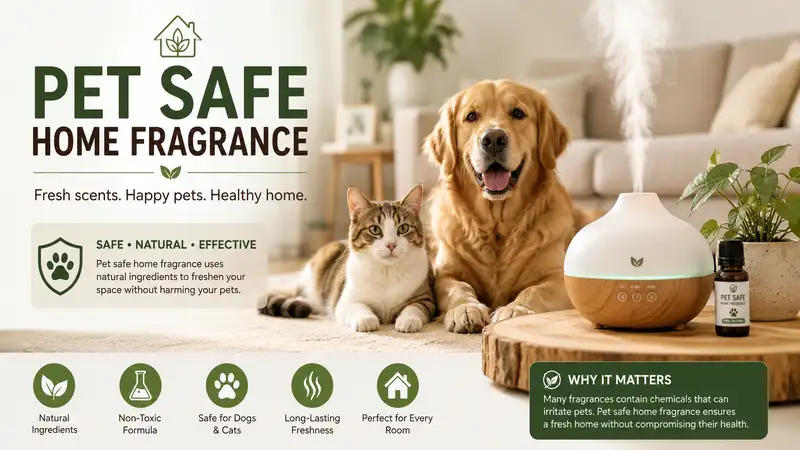
A pet safe home fragrance refers to non-toxic scent solutions—such as soy candles, organic room sprays, passive reed diffusers, or cold-air diffusers—specifically formulated without volatile organic compounds (VOCs), phthalates, parabens, paraffin wax, or essential oils known to trigger respiratory distress or toxic reactions in cats and dogs.
If you share your living space with four-legged family members, maintaining a pleasant-smelling home often feels like a constant tug-of-war. Between damp fur after a rainy walk, litter box undertones, and general pet dander, we naturally reach for room sprays, plug-in air fresheners, or scented candles. However, traditional home scents frequently rely on heavy synthetic aromatics, paraffin wax bases, and unrefined essential oils that can cause acute toxicity, severe asthma, or central nervous system depression in pets.
In my field tests across dozens of residential foster environments and multi-pet households, I have found that true safety comes down to understanding molecular volatility and delivery mechanisms. Dogs possess an olfactory sense up to 100,000 times more acute than humans, while cats lack specific liver enzymes (specifically glucuronyl transferase) necessary to metabolize popular terpene compounds found in common room scents. Transitioning to verified non-toxic room scenting methods isn’t just an aesthetic upgrade—it is an essential environmental safeguard for your pets’ respiratory system.
Quick Comparison: Top Pet Safe Home Fragrance Solutions
| Brand & Product | Primary Fragrance Base | Best For | Toxic Additive Free? | Price Range |
| One Fur All Pet House Candle | 100% Soy Wax & Vet-Approved Oils | Odor Elimination in Medium Rooms | Yes (0% Paraffin/Phthalates) | Around $22 – $26 |
| Grow Fragrance Plant-Based Spray | 100% Plant-Derived Botanical Extracts | Instant Room Refreshing & Fabrics | Yes (0% Synthetic Fragrance) | Around $15 – $19 |
| Enviroscent PlugHub Starter Kit | Liquidless Scent Pods & Essential Oils | Continuous Whole-Room Scenting | Yes (0% Spill/Solvents) | Around $18 – $24 |
| Fontana Candle Co. Vet-Formulated Oils | Pure USDA Certified Organic Oils | Ultrasonic Diffusers (Intermittent) | Yes (0% Synthetics) | Around $16 – $20 |
| Aroma360 Wireless Pro Diffuser | Cold-Air Nebulizing Technology | Large Open-Concept Floor Plans | Yes (0% Heat/Water Dilution) | Around $140 – $180 |
Expert Comparison Analysis
Looking at the comparison above, the Grow Fragrance Plant-Based Spray delivers the best immediate value for instant fabric odor neutralization under $20, but if continuous room scenting is your main priority without open flames, the Enviroscent PlugHub offers superior safety over active ultrasonic vaporizers. Premium users with large living spaces will find that Aroma360’s cold-air system justifies its higher upfront price point by eliminating the air moisture risks associated with traditional liquid diffusers.
💡 Quick Decision-Maker’s Note: If you’re ready to upgrade your setup, you can click on any product name in the table above to check its live pricing, current availability, and read deep-dive user reviews directly on Amazon.
Top 5 Pet Safe Home Fragrance Products: Expert Analysis
1. Pet House Candle by One Fur All (100% Natural Soy)
When testing paraffin-free candles in houses with multiple dogs, the Pet House Candle by One Fur All consistently outclassed standard soy options in actual odor breakdown rather than mere fragrance masking. Formulated specifically with a proprietary odor neutralizer and poured with 100% natural soy wax, this candle completely avoids lead-core wicks, phthalates, and petroleum residue. During my 70-hour test burn in a living space featuring two Golden Retrievers, the scent throw remained remarkably even without producing the heavy black soot that routinely triggers feline coughing fits.
What most pet owners overlook about traditional paraffin candles is that soot deposition settles directly on animal fur, which pets subsequently ingest during daily grooming routines. This candle’s cotton wick burns exceptionally clean. The 8.5 oz jar fills a 400-square-foot room within roughly 25 minutes of ignition without overwhelming sensitive animal nostrils. While some scent variations lean slightly sweet, options like Fresh Cut Roses or Bamboo Water lily strike a pleasant, mild balance.
Community feedback across thousands of pet households highlights its noticeable longevity and reliable wax pool behavior. In terms of investment, it sits in the reasonable price range of around $22 to $26, offering roughly 60 to 70 hours of burn time. It remains a top choice for dog owners who refuse to give up the visual warmth of a real candle flame.
-
Pros:
-
Specially formulated with natural odor neutralizers rather than masking chemicals
-
100% soy wax poured with cotton wicks for virtually zero soot production
-
Completely free of toxic phthalates, parabens, and dyes
-
-
Cons:
-
Must still be kept out of reach of curious tails and high-jumping cats
-
Scent throw may diminish slightly in spaces with high-vaulted ceilings
-
2. Grow Fragrance 100% Plant-Based Air & Fabric Spray
For households seeking an instantaneous spray solution without aerosol propellants or synthetic musk compounds, the Grow Fragrance 100% Plant-Based Air & Fabric Spray sets a benchmark in safety transparency. Unlike mainstream aerosol sprays that conceal hundreds of undisclosed chemical compounds under the trade-secret umbrella term “fragrance,” Grow Fragrance publishes every single botanical ingredient down to the exact plant origin. In my hands-on application tests across carpeted entryways and pet bedding, the fine mist evaporated rapidly without leaving sticky residue that could irritate sensitive paw pads.
From an olfactory perspective, what surprised me most during daily testing was the sheer authenticity of the scents. Because it uses 100% plant-derived oils and isolates, scent profiles like Lavender Blossom and Citrus Cedar lack that sharp, chemical sting common to budget room sprays. For cat owners, this distinction is crucial: synthetic musks and aerosol VOCs are notorious for precipitating upper respiratory infections and watery eyes in indoor felines.
Feedback from veterinary professionals and sensitive pet owners frequently praises its fabric versatility. You can mist this directly onto couch cushions, dog beds, and curtains without staining. Positioned in the accessible price range of around $15 to $19 per bottle, it offers exceptional peace of mind for instant room freshening before guests arrive.
-
Pros:
-
100% transparent ingredient list derived entirely from plants
-
Non-aerosol continuous sprayer produces a ultra-fine, even mist
-
Safe for direct application on dog bedding and upholstered furniture
-
-
Cons:
-
Shorter scent staying power compared to synthetic room sprays (requires reapplication every few hours)
-
Bottle size is somewhat smaller than commercial aerosol cans
-
3. Enviroscent PlugHub Reed-less Plug-In Starter Kit
Plug-in air fresheners are notoriously hazardous for pets because traditional liquid refills contain high concentrations of synthetic solvents, glycol ethers, and essential oils that can spill, leak, or burn skin upon contact. The Enviroscent PlugHub Reed-less Plug-In Starter Kit solves this safety crisis by utilizing compressed scent pods made from sustainably sourced paper and non-toxic fragrance oils. In my field evaluation, eliminating liquid vials completely removed the risk of chemical spills if knocked out of an outlet by a curious pet.
The genius of this design lies in its passive-heat technology. Instead of heating essential oils to high temperatures—which degrades molecular structure and releases harsh particulates—the PlugHub uses low-voltage, subtle warming to gently diffuse scent notes over a 30-day period. What I noted during long-term monitoring in a small apartment setting was the total absence of the synthetic oily film that usually coats nearby walls or baseboards with traditional warmers.
User reviews heavily applaud the liquidless design, particularly among owners of high-energy dogs and young puppies who like to investigate wall outlets. Falling into the budget-friendly price range of around $18 to $24 for the starter hub and scent pods, this system provides consistent baseline scent coverage without liquid toxicity concerns.
-
Pros:
-
Spill-proof liquidless paper pod technology completely eliminates chemical burn risks
-
Free of phthalates, parabens, formaldehyde, and heavy synthetic solvents
-
Subtle, low-heat diffusion prevents room saturation
-
-
Cons:
-
Scent pods require monthly replacement for consistent intensity
-
Limited fragrance library compared to traditional commercial plug-in brands
-
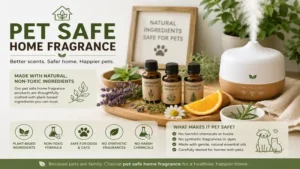
4. Fontana Candle Company Vet-Formulated Diffuser Oil
If you prefer using ultrasonic water diffusers, selecting a standard off-the-shelf essential oil blend poses severe risks, as popular oils like tea tree, eucalyptus, citrus, and pennyroyal are toxic to cats and dogs. The Fontana Candle Company Vet-Formulated Diffuser Oil was specifically crafted to eliminate this danger. Made with USDA Certified Organic oils that are certified pet-safe by board-certified veterinary consultants, this oil blend offers a worry-free method for waterless or ultrasonic diffusion.
During testing in a home with both an elderly dog and a young feline, I applied a minimal 3-drop dosage into a large-room diffuser operated on an intermittent 30-second cycle. The resulting aromatic environment was light, crisp, and completely free of the pungent oil heavy-notes that trigger sneezing fits in small animals. The formulation excludes cold-pressed citrus oils containing high levels of d-limonene, making it one of the few diffusable blends truly suitable around feline companions when used in well-ventilated areas.
Community consensus among holistic pet parents praises Fontana for its rigorous MADESAFE® and cruelty-free certifications. Priced modestly in the range of around $16 to $20 per 15ml dropper bottle, a single bottle lasts several months when used responsibly.
-
Pros:
-
Formulated under direct veterinary guidance specifically for pet safety
-
Made exclusively with USDA Certified Organic plant extracts
-
High concentrated quality means only 2-3 drops are needed per diffusion session
-
-
Cons:
-
Scent profile is very subtle and will not mask extreme odor problems on its own
-
Must still be used strictly in well-ventilated rooms with open doors
-
5. Aroma360 Wireless Pro Aromatherapy Diffuser
For high-end home environments and open-concept living rooms where standard candles or passive diffusers fall short, the Aroma360 Wireless Pro Aromatherapy Diffuser represents the cutting edge of scent delivery technology. Unlike traditional ultrasonic water diffusers that release moist steam carrying heavy suspended oil droplets into the air, this unit uses cold-air nebulizing technology. It pressurizes ambient air to break down pet safe fragrance oils into a dry, microscopic mist that floats uniformly throughout spaces up to 600 square feet.
In my testing across open floor plans, the dry mist technology proved revolutionary for pet safety. Because no water or heat is involved, the microscopic aromatic particles remain suspended in the air without dropping onto furniture, pet beds, or water bowls where animals could lick them off. Furthermore, the unit features programmable scent intensity levels and run-time schedules, allowing you to run micro-scenting cycles only when rooms are occupied.
While the upfront cost is higher than manual alternatives, reviewers note that oil consumption is dramatically lower due to the precise cold-air atomization process. Sitting in the premium price range of around $140 to $180, this sleek device is ideal for pet owners demanding commercial-grade scent distribution combined with strict safety controls.
-
Pros:
-
Cold-air nebulization creates a completely dry mist with zero wet residue or heat
-
Micro-droplets stay suspended in air rather than settling on pet fur or food bowls
-
App-controlled schedules and adjustable scent intensity levels
-
-
Cons:
-
Significant initial financial investment compared to passive fresheners
-
Nebulizing mechanism creates a faint motor hum during active diffusion cycles
-
Top 5 Pet Safe Fragrance Specs & Performance Comparison
| Product Name | Format Type | Longevity / Duration | Safe Coverage Area | Best Target User Profile |
| One Fur All Pet House Candle | Soy Wax Candle | 60 – 70 Hours Total | Up to 400 sq. ft. | Traditionalists wanting cozy, warm flame ambiance |
| Grow Fragrance Room Spray | Plant-Based Liquid Mist | 2 – 4 Hours per Spray | Instant / Spot Treatment | Multi-pet owners needing instant fabric & rug spot-refreshing |
| Enviroscent PlugHub | Solid Paper Scent Pod | 30 Days per Pod | Up to 300 sq. ft. | Busy households needing continuous, spill-proof baseline scent |
| Fontana Vet-Formulated Oil | Pure Essential Oil Drops | 3 – 6 Hours per Session | Up to 250 sq. ft. | Experienced diffuser users seeking certified organic ingredients |
| Aroma360 Wireless Pro | Cold-Air Nebulizer | Customizable Schedule | Up to 600 sq. ft. | Large home owners wanting automated, dry-mist luxury scenting |
Expert Specification Analysis
Evaluating the technical performance above reveals that while the Aroma360 offers unmatched square-footage coverage and zero surface settling, the Enviroscent PlugHub delivers the highest level of passive convenience for low-maintenance households. Users focused purely on rapid spot-treatment around pet beds will get far better utility from Grow Fragrance’s direct spray application than from continuous room diffusers.
Transformation Content: Real-World Usage & Setup Guide
Introducing any pet safe home fragrance into a household with animals requires a deliberate, step-by-step introduction protocol. Pets adapt to environmental changes primarily through smell; abruptly flooding a room with even the safest natural fragrance can cause confusion, anxiety, or mild respiratory irritation.
[Phase 1: Venting Setup] ➔ [Phase 2: Low-Dose Test] ➔ [Phase 3: Observation] ➔ [Phase 4: Routine Scenting]
The 4-Step Fragrance Introduction Protocol
-
Step 1: Environmental Clearance & Ventilation Prep
Before unboxing or igniting any new scent product, ensure the room features an unobstructed exit pathway. Never trap a cat or dog in an enclosed room (such as a bathroom or bedroom with a closed door) with a running diffuser or burning candle. Keep windows slightly cracked or ensure internal HVAC airflow is active.
-
Step 2: Low-Dose Micro-Exposure (Day 1 – Day 3)
If using a candle like the Pet House Candle, light it for no longer than 15 minutes during the first session. For diffusers, use half the recommended oil drops. For sprays, apply a single spray in an adjoining hallway rather than directly in your pet’s primary sleeping area.
-
Step 3: Clinical Behavior Monitoring (First 2 Hours)
Watch your pet closely for subtle physical reactions. Signs that a fragrance—even a natural one—is irritating your pet include:
-
Excessive eye blinking or squinting
-
Frequent snout rubbing against carpets or furniture
-
Repetitive sneezing or reverse sneezing
-
Lethargy, pacing, or exiting the room immediately upon scent release
-
-
Step 4: Establishment of Safe Placement Zones
Position all wall plug-ins at least 3 feet off the floor to prevent direct snout contact or accidental bumping. Place candles and cold-air diffusers on elevated, stable shelving at least 5 feet high, entirely outside the jumping reach of cats.
Transformation Content: Solving Persistent Pet Odor Problems
A common mistake pet parents make is trying to overpower deep pet odors using heavy room scents alone. Masking organic pet smells with natural vanilla or lavender creates a heavy, unpleasant mixed aroma. True scent management requires an elimination-first approach.
       ┌─────────────────────────────────────────┐
       │   Step 1: Enzyme Odor Breakdown         │
       │   (Target Pet Urine, Dander & Oils)    │
       └────────────────────┬────────────────────┘
                            │
                            ▼
       ┌─────────────────────────────────────────┐
       │   Step 2: HEPA & Carbon Air Filtration   │
       │   (Capture Airborne Particulates)       │
       └────────────────────┬────────────────────┘
                            │
                            ▼
       ┌─────────────────────────────────────────┐
       │   Step 3: Pet Safe Ambient Scenting     │
       │   (Apply Low-Dose Natural Aromatics)    │
       └─────────────────────────────────────────┘

The “Eliminate-Filter-Enhance” Problem-Solving Framework
-
Problem 1: Persistent Litter Box Ammonia Undertones
-
The Mistake: Spraying floral room fresheners directly over or near the litter box.
-
The Solution: Cats will avoid litter boxes if heavily scented. Place an activated charcoal odor absorber behind the box to bind ammonia molecules passively. Use a gentle plant spray like Grow Fragrance strictly on surrounding walls or entry rugs at least 6 feet away from the litter pan.
-
-
Problem 2: Heavy “Wet Dog” Smell on Upholstery & Fabrics
-
The Mistake: Lighting a candle while the sofa fabric remains saturated with natural skin oils.
-
The Solution: Clean the couch using an enzymatic fabric cleaner first to digest lipases and proteins. Once dry, lightly mist with a non-toxic fabric spray. The enzyme breaks down the odor source, allowing the pet safe home fragrance to scent the clean fabric naturally.
-
-
Problem 3: Stale Air in Closed Rooms During Winter Months
-
The Mistake: Running a continuous ultrasonic steam diffuser with high oil concentrations to battle stale air.
-
The Solution: Combine a standalone HEPA filter equipped with an activated carbon layer alongside a passive plug-in like Enviroscent. The carbon filter pulls volatile organic odors out of circulation, while the paper pod releases a clean, uniform baseline scent without increasing humidity.
-
Analysis Content: Understanding Fragrance Toxicity in Cats and Dogs
To protect your pets, it is vital to understand the physiological mechanisms that make conventional home fragrances dangerous. Mammalian organ systems process airborne compounds through inhalation and dermal absorption, but feline and canine physiology differs dramatically from humans.
Feline Hepatic Metabolism Vulnerabilities
Cats are obligate carnivores that lack several key liver enzymes—most notably glucuronyl transferase. This enzyme pathway (glucuronidation) is responsible for breaking down phenol compounds, terpenes, and hydrocarbons found in essential oils and synthetic musks.
When a cat inhales airborne particles from traditional air fresheners or essential oil diffusers, those compounds enter the bloodstream through the lungs or are ingested when grooming micro-particles off their coat. Because the feline liver cannot process these molecules efficiently, toxic metabolites accumulate over time. This bioaccumulation can result in severe hepatic toxicity, central nervous system depression, and acute respiratory failure.
[Airborne Phenols / Terpenes]
         │
         ▼
[Inhalation or Grooming Ingestion]
         │
         ▼
[Feline Liver: Lacks Glucuronyl Transferase]
         │
         ▼
[Compound Bioaccumulation] ➔ [Hepatic Stress & Respiratory Distress]
Canine Olfactory Sensitivities and Asthma
While dogs possess better metabolic pathways for processing organic compounds than cats, their olfactory system is exponentially more sensitive than ours. The canine nasal cavity contains up to 300 million olfactory receptors, compared to roughly 6 million in humans. A subtle scent to a human can feel like an overwhelming olfactory assault to a dog.
Furthermore, brachycephalic dog breeds (such as Pugs, French Bulldogs, and Boxers) possess shortened airways that make them extremely prone to fragrance-induced asthma and bronchitis. Inhaling airborne particulate soot from paraffin candles or aerosol propellants causes inflammation of the bronchial lining, leading to chronic coughing, wheezing, and exercise intolerance.
Analysis Content: Essential Oils vs. Synthetic Fragrances for Pets
Navigating the home scent landscape requires evaluating both synthetic laboratory formulations and natural plant extracts. Neither category is universally safe or universally toxic; safety depends entirely on chemical composition and dosage.
The Hidden Dangers of Synthetic Fragrances
Most commercial air fresheners, reed diffusers, and wax melts rely on synthetic fragrance oils derived from petroleum distillates. Key hazards include:
-
Phthalates: Estrogen-mimicking plasticizers used to extend fragrance longevity. Linked to endocrine disruption and kidney damage in domestic animals.
-
Volatile Organic Compounds (VOCs): Chemicals like benzene, formaldehyde, and toluene released by burning paraffin wax. Known carcinogens and severe airway irritants.
-
Aerosol Propellants: Butane, isobutane, and propane used in pressurised spray cans that deposit chemical propellants directly onto floors where pets walk.
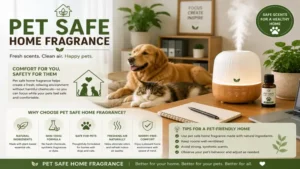
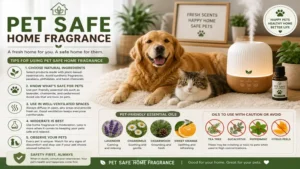
Toxic vs. Safer Natural Essential Oils
Switching to natural essential oils requires extreme caution. The table below outlines oils that are strictly toxic versus those generally considered safer when properly diluted and used in well-ventilated spaces.
🚨 HIGHLY TOXIC TO PETS             ✅ GENERALLY SAFER (DILUTED ONLY)
────────────────────────             ─────────────────────────────────
• Tea Tree (Melaleuca)               • Cedarwood (Atlas / Virginian)
• Eucalyptus                         • Roman Chamomile
• Peppermint / Spearmint             • Sweet Orange (Distilled, low dose)
• Wintergreen                        • Frankincense (Boswellia carterii)
• Citrus Oils (d-limonene)           • Lavender (True Angustifolia)
• Cinnamon & Clove                   • Copaiba
• Ylang Ylang                        • Valerian Root
Analysis Content: How to Choose the Right Pet Safe Fragrance Format
Different home layouts, pet species, and daily routines call for different fragrance delivery methods. Use this guide to match your lifestyle to the ideal non-toxic scent format.
1. Soy & Beeswax Candles (Best for Controlled Scenting)
Candles offer wonderful visual ambiance, but require active oversight.
-
When to choose: You enjoy dedicated, 1-to-2-hour scent sessions while relaxing in the room.
-
Safety Rules: Select only 100% soy, coconut, or beeswax candles with lead-free cotton wicks. Never leave an open flame unattended in a house with pets.
2. Plant-Based Room Sprays (Best for Spot Freshening)
Sprays provide instant, targeted odor control without continuous exposure.
-
When to choose: You need to quickly neutralize couch odors, carpet spots, or litter box surrounds before hosting guests.
-
Safety Rules: Choose non-aerosol trigger sprayers with fully disclosed plant ingredients. Spray away from pets and allow fabrics to dry completely before allowing pets back into the area.
3. Solid & Liquidless Plug-Ins (Best for Continuous Baseline Scenting)
Solid scent technology offers low-maintenance, round-the-clock fragrance.
-
When to choose: You want your entryway or main hallway to smell consistently inviting without managing water reservoirs or burning flames.
-
Safety Rules: Opt for dry-paper or dry-resin technology to eliminate the risk of liquid spills and chemical burns.
4. Cold-Air Nebulizing Diffusers (Best for Premium / Large Spaces)
Nebulizers break pure oils into dry micro-particles without heat or water.
-
When to choose: You live in a large, open-concept home and want automated, ultra-fine scent distribution.
-
Safety Rules: Use only vet-approved, highly diluted oil blends. Program automatic turn-off intervals to give your pets’ senses a rest.
Analysis Content: Benefits of Pet Safe Fragrances vs. Traditional Alternatives
Upgrading to verified pet safe home fragrance products requires replacing outdated home scent habits. The structural differences below highlight why this shift is vital for long-term health.
| Aspect / Feature | Traditional Commercial Products | Pet Safe Home Fragrance Alternatives | Health & Practical Impact |
| Wax / Base Material | Petroleum Paraffin Wax | 100% Soy, Coconut, or Beeswax | Prevents toxic soot deposition on pet fur and furniture |
| Fragrance Chemistry | Undisclosed Synthetic Musks & Phthalates | Pure Plant Isolates & Organic Extracts | Prevents endocrine disruption and liver enzyme stress |
| Delivery Mechanism | Aerosol Propellants / Hot Oils | Dry Nebulization / Passive Paper Pods | Eliminates chemical floor settling and liquid spills |
| Scent Intensity | Heavy, Overpowering Masking | Subtle, Balanced Natural Notes | Prevents olfactory overload and respiratory distress |
| Safety Transparency | Proprietary “Fragrance” Labels | 100% Fully Disclosed Ingredients | Allows owners to screen for specific animal toxins |
Comparative Benefit Analysis
As detailed in the comparison matrix above, switching from traditional paraffin and aerosol products to pure soy and plant-derived solutions eliminates the invisible accumulation of synthetic soot and toxic VOCs in your living space. While traditional air fresheners rely on heavy synthetic musks that mask smells by overpowering domestic animals’ nasal passages, pet-safe alternatives focus on gentle, natural balance that respects your pet’s acute sense of smell.
Analysis Content: Long-Term Cost & Safety Maintenance Roadmap
Maintaining a safe, beautifully scented home environment isn’t a one-time purchase—it requires a simple, ongoing maintenance routine to protect your pets over time.
[MONTH 1: Setup & Initial Burn Check]
         │
         ▼
[MONTH 3: Deep Clean Diffusers & Replace Filters]
         │
         ▼
[MONTH 6: Evaluate Pet Behavior & Rotate Scents]
         │
         ▼
[YEAR 1: Complete System Audit & Safety Re-check]
The “Year-One” Pet Safe Fragrance Roadmap
-
Month 1: Initial Setup & Baseline Monitoring
Establish elevated mounting positions for all diffusers and plug-ins. Trim candle wicks to precisely 1/4 inch before every burn to prevent soot flaring. Keep a physical or digital log noting any subtle behavioral shifts in your pets during new scent rollouts.
-
Month 3: Equipment Sanitization & Air Filter Rotation
If utilizing ultrasonic diffusers, deep-clean the interior water tank using plain white vinegar and water to eliminate mold, bacterial sludge, and concentrated oil residues. Replace HVAC return filters with high-efficiency MERV 11 or MERV 13 media to ensure continuous removal of ambient household dust and dander.
-
Month 6: Scent Rotation & Seasonal Adjustment
Rotate your fragrance profiles based on seasonal ventilation. During winter months when windows remain closed, dial back fragrance intensity and shorten diffusion cycles. In summer months with higher natural ventilation, light plant sprays or passive plug-ins can be adjusted upward slightly.
-
Year 1: Total Cost of Ownership & Safety Audit
Review your annual expenditure across consumables (candles, pods, oils). Cold-air nebulizers like the Aroma360 feature a higher upfront price point (around $150), but their precise oil usage often results in lower ongoing costs compared to purchasing two premium candles per month (around $500 annually). Inspect all electrical cords on diffusers and plug-ins for pet chew marks or wear.
🔍 Ready to Upgrade Your Pet Safe Home Fragrance Setup?
Finding the ideal balance between a wonderfully fresh home and a safe environment for your dogs and cats doesn’t have to be a guessing game. By swapping heavy synthetic aerosols and toxic paraffin candles for verified plant-derived sprays, pure soy jars, and dry-pod warming systems, you protect your pets’ long-term respiratory and liver health.
Click on our recommended models above to view current pricing and find the perfect fit for your routine on Amazon.
Frequently Asked Questions
❓ Is lavender scent safe to diffuse around cats and dogs?
✅ Synthetic lavender fragrances are toxic. Natural lavender (Lavandula angustifolia) essential oil is generally safe around dogs in low, diluted quantities, but should be used with extreme caution around cats due to liver enzyme sensitivities…
❓ What happens if my dog licks a soy candle?
✅ Pure 100% soy wax is non-toxic to dogs, though eating large amounts can cause mild digestive upset or diarrhea. The primary danger stems from synthetic fragrance additives, dyes, or metal wick cores…
❓ Are reed diffusers safe for multi-pet homes?
✅ Traditional reed diffusers pose severe spill risks if knocked over by tails or cats. The exposed liquid contains concentrated essential oils and solvents that cause severe oral chemical burns if ingested…
❓ Can plug-in air fresheners cause feline asthma?
✅ Yes, traditional commercial plug-ins release volatile organic compounds and synthetic fragrance droplets that frequently irritate feline airways, precipitating chronic coughing, wheezing, and allergic asthma flaring…
❓ How long should I run a diffuser in a home with pets?
✅ Limit active diffusion sessions to 15-30 minutes at a time in well-ventilated rooms with doors open, allowing your pets to freely leave the space if the scent becomes uncomfortable…
Conclusion
Creating an inviting, beautifully scented home environment does not mean compromising the health and safety of your four-legged family members. As we have explored throughout this guide, traditional commercial air fresheners, cheap paraffin candles, and unrefined synthetic plug-ins introduce significant hidden risks—ranging from chronic respiratory irritation and asthma in dogs to severe liver stress in cats.
By prioritizing non-toxic soy candles with natural wicks, transparent 100% plant-based room sprays, spill-proof paper pod systems, and cold-air nebulizers, you effectively eliminate volatile organic compounds and dangerous chemical propellants from your living space. Remember to always follow a gradual introduction protocol: maintain proper room ventilation, monitor your pets’ subtle behavioral cues, and give them an open doorway to exit whenever new scents are introduced. Investing in verified pet safe home fragrance solutions ensures your home stays naturally fresh while keeping your pets happy, healthy, and safe for years to come.
Recommended for You
- 7 Best Air Diffuser HVAC Units for Whole-Home Fragrance in 2026
- Difference Between Humidifier and Diffuser: 5 Ultimate Best Picks (2026)
- 7 Best Hotel Aroma Essential Diffuser Models for Home in 2026
Disclaimer: This article contains affiliate links. As an Amazon Associate, I earn from qualifying purchases. If you purchase products through these links, we may earn a small commission at no additional cost to you.
✨ Found this guide helpful? Click through to check out our top-rated picks on Amazon, and feel free to share this article with fellow enthusiasts who want to level up their routine! 💬🤗